Up, Up, Down, Down: The Accidental History of the “Konami Code” (The Gamer’s Secret Handshake)
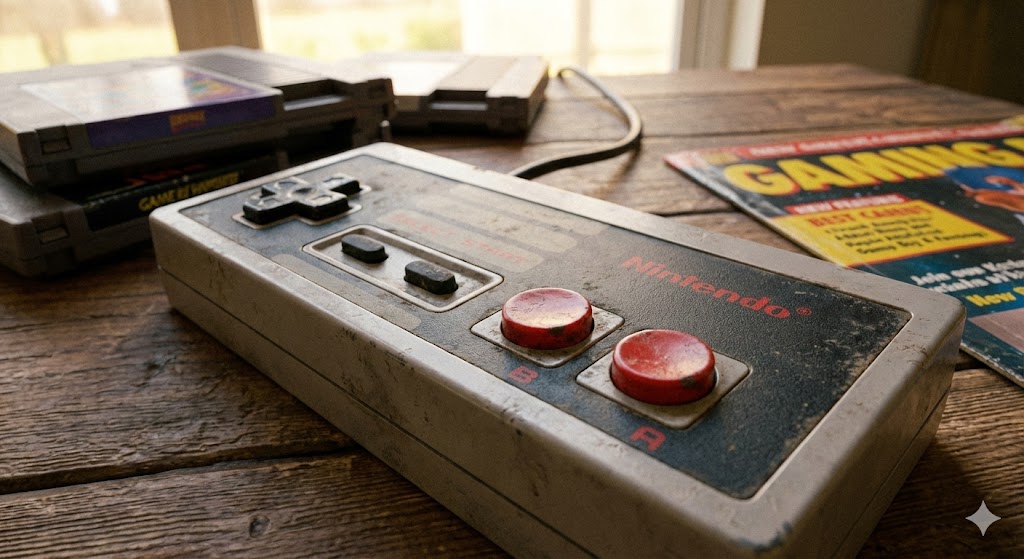
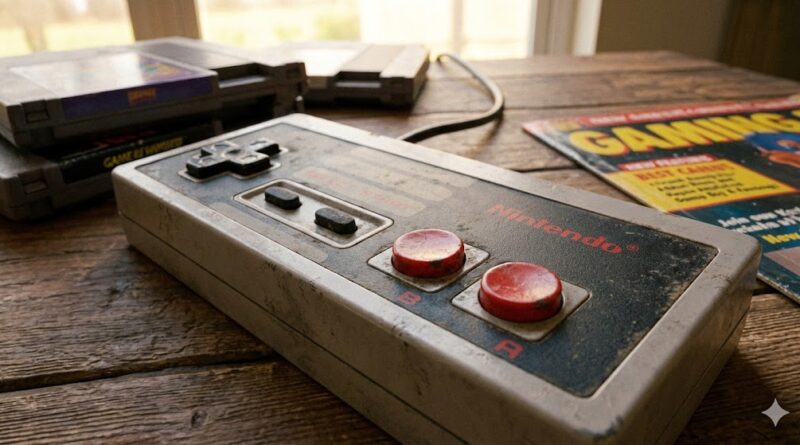
If you hand a game controller to anyone born between 1980 and 2000, their thumbs will instinctively punch in a sequence without even thinking: Up, Up, Down, Down, Left, Right, Left, Right, B, A, Start.
It is the “Konami Code.” It is the most famous sequence of buttons in history. It is the gamer’s secret handshake. Today, “cheating” usually means stealing credit card numbers or using aim-bots in competitive shooters. But in the 80s, cheating was innocent. It was a way to see the ending of a game you paid $50 for. But do you know where it actually came from? The truth is, it wasn’t a grand design. It was a mistake.
It Started with a Difficult Job (Gradius, 1986) The year was 1986. A developer at Konami named Kazuhisa Hashimoto was tasked with porting the popular arcade scrolling shooter Gradius to the Nintendo Entertainment System (NES). There was just one problem: The game was brutally hard. During the testing phase, Hashimoto found that he kept dying before he could test the later levels. He was a developer, not a pro gamer. Frustrated, he decided to create a “backdoor” for himself.
He programmed a sequence of buttons that, when pressed on the title screen, would give his ship full power-ups (Missiles, Lasers, Shields). He chose a sequence that was easy to remember and hard to hit accidentally. He finished his testing. But in the rush to ship the game cartridges to stores, he forgot to remove the code. Oops.
Contra Made It Legendary While Gradius was the birth, Contra (1988) was the explosion. If Gradius was hard, Contra was impossible. It was a “Run and Gun” game where one single bullet killed you. You started with 3 lives. For a normal human child, the game lasted about 45 seconds.
Then, word got out. If you entered Hashimoto’s code at the title screen, something magical happened. You didn’t get 3 lives. You got 30 lives. Suddenly, the impossible became possible. The Konami Code transformed Contra from a frustrating waste of money into one of the most beloved co-op games of all time. It wasn’t just a cheat; it was a survival necessity.
The Viral Spread (Before the Internet) Here is the most amazing part: This happened before the internet. There was no Google, no Reddit, no YouTube. So how did millions of kids across America, Europe, and Asia learn the code? Two ways:
- Nintendo Power Magazine: The holy grail of tips. If you had a subscription, you were the coolest kid in school.
- The Playground Wireless Network: Information spread by mouth. “My cousin’s friend told me if you press Up Up Down Down…” It was a shared cultural secret. Knowing the code meant you were part of the tribe.
Cultural Impact: From Games to Bank ATMs The code became so iconic that it escaped the video game world.
- Wreck-It Ralph: In the Disney movie, King Candy uses the code to access the game’s mainframe.
- Websites: For years, if you typed the code on the Vogue UK website, a dinosaur in a hat would appear. If you typed it on BuzzFeed, the text would flip upside down.
- Siri & Alexa: Try saying “Up Up Down Down Left Right Left Right B A Start” to your smart speaker today. Alexa will reply: “Super Alexa mode, activated. Starting reactors… online.”