Merging Man and Machine: Inside Neuralink’s First Human Trials and the Dawn of the “Cyborg Era”
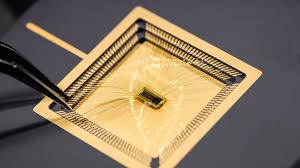
Elon Musk is known for disrupting industries: electric cars (Tesla) and rockets (SpaceX). But his third act might be his most controversial and consequential yet. His company, Neuralink, has officially started human trials. The goal? To implant a coin-sized chip, roughly the size of a Fitbit face, directly into the human skull, weaving microscopic threads into the soft tissue of the brain.
It sounds like a Black Mirror episode. It sounds like science fiction horror. But for the patients involved in the 2024-2025 trials, it is nothing short of a biblical miracle. We are witnessing the first step in the merging of biological intelligence with digital silicon.
The Procedure: Meet the “Sewing Machine” Robot The most impressive part of Neuralink isn’t just the chip (called “The Link”); it’s the robot built to install it. The human hand is too shaky to thread wires thinner than a human hair into specific neurons without damaging blood vessels. So, Neuralink built the R1 Robot.
Think of it as a super-advanced sewing machine. It surgically removes a small circle of the skull, inserts the electrodes with micron-level precision, and seals the implant flush with the skull. The goal is to make the surgery as routine and quick as LASIK eye surgery—a “lunch break procedure” where you walk in a human and walk out a cyborg.
The Medical Miracle: “Telepathy” in Action The first product is aptly named “Telepathy.” For people with quadriplegia or ALS (Lou Gehrig’s disease), this technology offers a way to communicate that feels like magic. We saw this with Noland Arbaugh, the first human patient. Paralyzed from the shoulders down, he was suddenly able to control a computer cursor using only his thoughts.
He didn’t just move a mouse; he played Civilization VI for 8 hours straight. He played Mario Kart. He posted on X. It reads the electrical spikes of neurons intending to move a hand and translates them into Bluetooth signals for a digital device. For the disabled community, this isn’t just a gadget; it is the restoration of freedom.
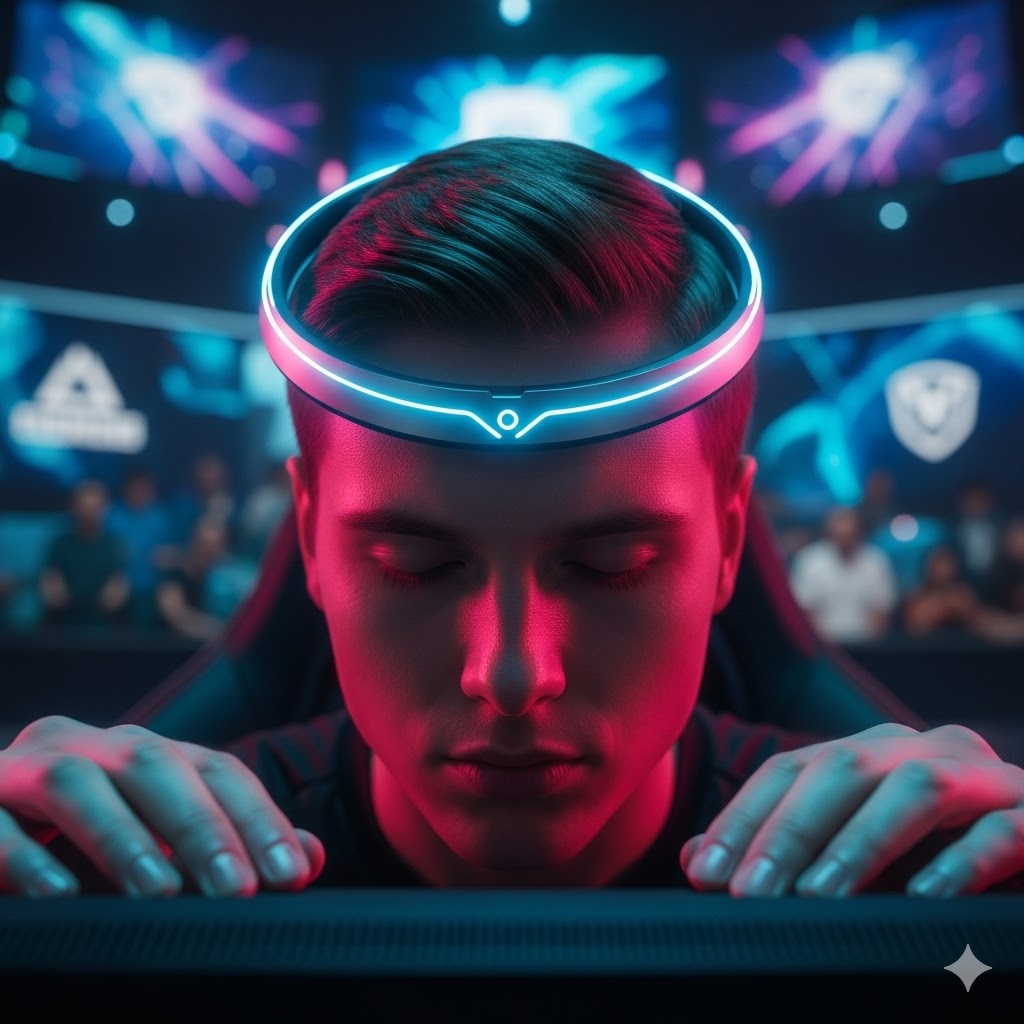
Beyond Healing: The “Symbiosis” Goal However, Elon Musk has never hidden his true, long-term ambition. Helping paralyzed patients is “Phase 1.” “Phase 2” is far more radical: Human-AI Symbiosis.
Musk argues that as Artificial Intelligence (AI) becomes smarter (Superintelligence), humans risk being left behind—becoming “house cats” to our AI overlords. The solution? If you can’t beat them, join them. Neuralink envisions a future where healthy humans get the chip to increase their “Bandwidth.”
- Instant Learning: Imagine downloading a new language or a skill (like Kung Fu in The Matrix) directly into your cortex.
- Memory Expansion: Offloading memories to the cloud to free up brain space.
- **High-Speed Input:**Typing at the speed of thought, bypassing the slow movement of thumbs on a screen.
The Competition: It’s Not Just Musk While Neuralink gets the headlines, the sector is booming.
- Synchron: A rival company that inserts the brain-chip through the blood vessels (jugular vein) like a heart stent, avoiding open-brain surgery entirely. They have already implanted devices in multiple patients.
- Blackrock Neurotech: A veteran in the field that has kept patients connected for years. The race is on to see who can build the “iPhone of the Brain.”
The Ethical Firewall: Are We Ready? Of course, allowing the internet inside our skulls opens a Pandora’s Box of ethical nightmares.
- Privacy: If the chip can read your thoughts to move a mouse, can it read your inner monologue? Can corporations harvest your dreams for ad data? (See our article on Digital Twins for similar concerns).
- Hacking: Every computer can be hacked. What happens when a hacker seizes control of your motor cortex?
- Inequality: Will we create a two-tier society? The “Enhanced” rich humans with chips vs. the “Natural” poor humans who can’t compute fast enough to get a job.