
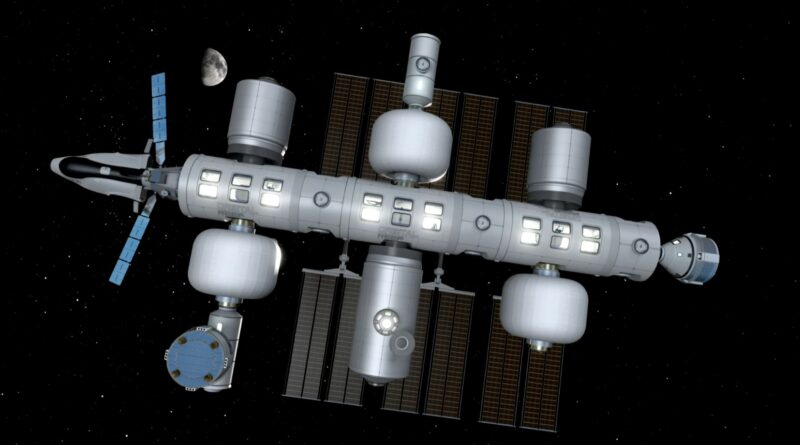
Vacation in Orbit: Space Hotels Are Coming Sooner Than You Think
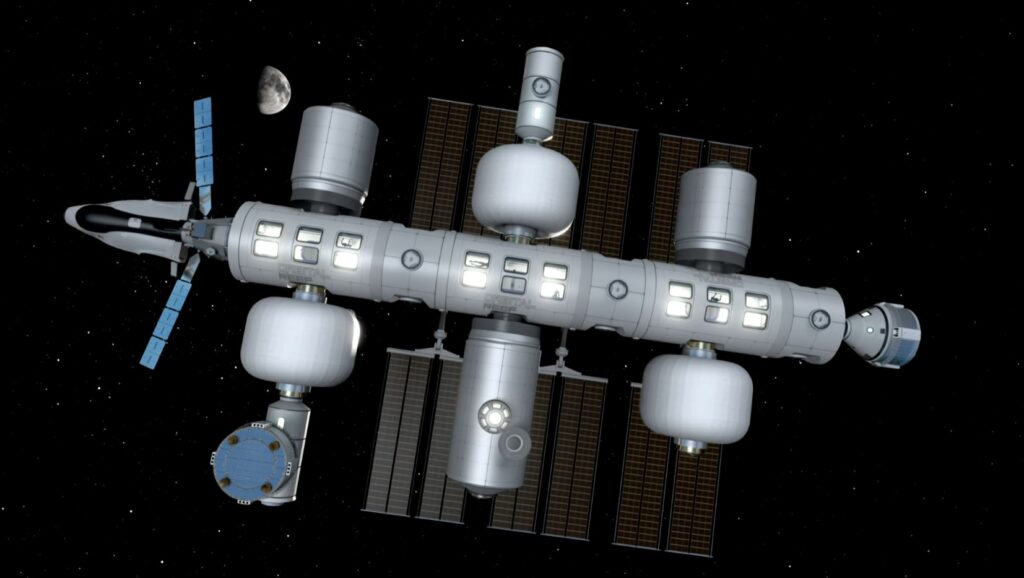
Pack your bags, but don’t forget the zero-gravity sickness pills. For the last decade, “Space Tourism” was a disappointment. It meant watching a billionaire put on a cowboy hat, ride a rocket for 10 minutes, float for 3 minutes, and land. It wasn’t travel; it was an expensive rollercoaster ride.
But as we enter late 2025, the era of “Quick Rocket Joyrides” is shifting to actual “Orbital Stays.” Companies like Blue Origin, Axiom Space, and Above Space (formerly OAC) are in a frantic race to launch the first fully commercial Orbital Reefs—business parks and luxury hotels floating in Low Earth Orbit (LEO). The question is no longer “If” we will vacation in space, but “How is the room service?”
From Joyrides to Real Estate: Who is Building What? This isn’t just concept art anymore. Hardware is being bent in factories right now. There are three main contenders fighting to become the “Hilton of the Stars”:
- Axiom Station: They are the first movers. Axiom is currently building modules that will attach to the existing International Space Station (ISS) before detaching to form their own free-flying hotel. They offer the most “authentic” astronaut experience.
- Orbital Reef (Blue Origin & Sierra Space): Pitched as a “Mixed-Use Business Park,” this is less about pure luxury and more about science and commerce. Think of it as a WeWork in orbit, where movie studios film zero-gravity scenes next to pharmaceutical labs growing crystals.
- Voyager Station (Above Space): This is the ambitious one. A rotating wheel station designed to create Artificial Gravity. This is crucial because it allows for a hotel experience where you can actually pour a drink into a glass and sleep in a bed without being strapped to a wall.
The Experience: Not Just Dried Ice Cream Imagine a hotel with the ultimate view: The curve of the Earth passing by your window every 90 minutes. You witness 16 sunrises and 16 sunsets every single day. But what is life actually like up there?
- Dining: Forget the squeeze tubes. 2025 space menus are curated by Michelin-star chefs. Using advanced induction heating and sticky sauces (to keep food on the plate), you can enjoy a near-normal meal.
- The Gym: In zero-gravity, your muscles atrophy quickly. The “Space Gym” isn’t optional; it’s mandatory. But it’s also fun—you can bench press 500 pounds effortlessly, though the resistance bands will still give you a workout.
- The Toilet Situation: It remains the most asked question. Modern space toilets use vacuum suction (airflow) instead of gravity. It’s loud, it’s intimidating, but in 2025, it’s far more private and hygienic than the contraptions used by Apollo astronauts.
The “Overview Effect” Beyond the luxury, the selling point is psychological. Astronauts speak of the “Overview Effect”—a cognitive shift that happens when you see Earth as a fragile blue marble in the void. Borders disappear. Conflicts seem petty. Space tourism companies aren’t just selling a vacation; they are selling a spiritual awakening. They claim that sending politicians and CEOs to space might actually save the planet below.
The Starship Factor: Why Now? Why is this happening in 2025 and not 2015? One word: Starship. SpaceX’s massive rocket has fundamentally broken the economics of spaceflight.
- Old Cost: To send 1kg of payload to orbit used to cost $10,000 – $20,000 (Space Shuttle era).
- New Cost: With Starship, estimates suggest costs dropping to under $100 per kg.
This means we can launch heavy, spacious hotel modules made of steel and glass, rather than cramping people into tiny tin cans. Volume is no longer a luxury constraint.
The Price Tag: From Billionaires to Millionaires The technology is ready. The problem, predictably, is the price. Right now, a ticket to the ISS via Axiom costs roughly $55 Million. It is the playground of the ultra-ultra-rich. However, analysts predict a curve similar to aviation. The first airplanes were only for the wealthy daredevils. By the 2030s, the goal is to bring the cost of a space stay down to the price of a luxury yacht trip (around $100,000 – $200,000).
Still expensive? Yes. But accessible enough that a dedicated upper-middle-class family could save for a lifetime for the ultimate honeymoon on the Moon.
Conclusion We are witnessing the “Gold Rush” of low earth orbit. For the first time in human history, leaving the planet doesn’t require you to be a government employee with a PhD in astrophysics. All it requires is a sense of adventure and a very thick wallet. The final frontier is now open for booking. Just make sure you get a window seat.
“Read Also: Why Gen Alpha is Spending Thousands on “Dumb” Tech: The 2025 CRT and Cassette Renaissance“