
RIP Keyboards? How 2025 Became the Year of “Neural Gaming” and Why Pro Gamers Are Panicking
For fifty years, the “language” of video games was physical. From the stiff rubber joystick of the Atari 2600 to the ultra-sensitive mechanical keyboards of 2024, the rule was simple: if you wanted to move, you had to twitch a muscle. The signal traveled from your brain, down your spinal cord, through your nerves, into your finger, and finally into a plastic button.
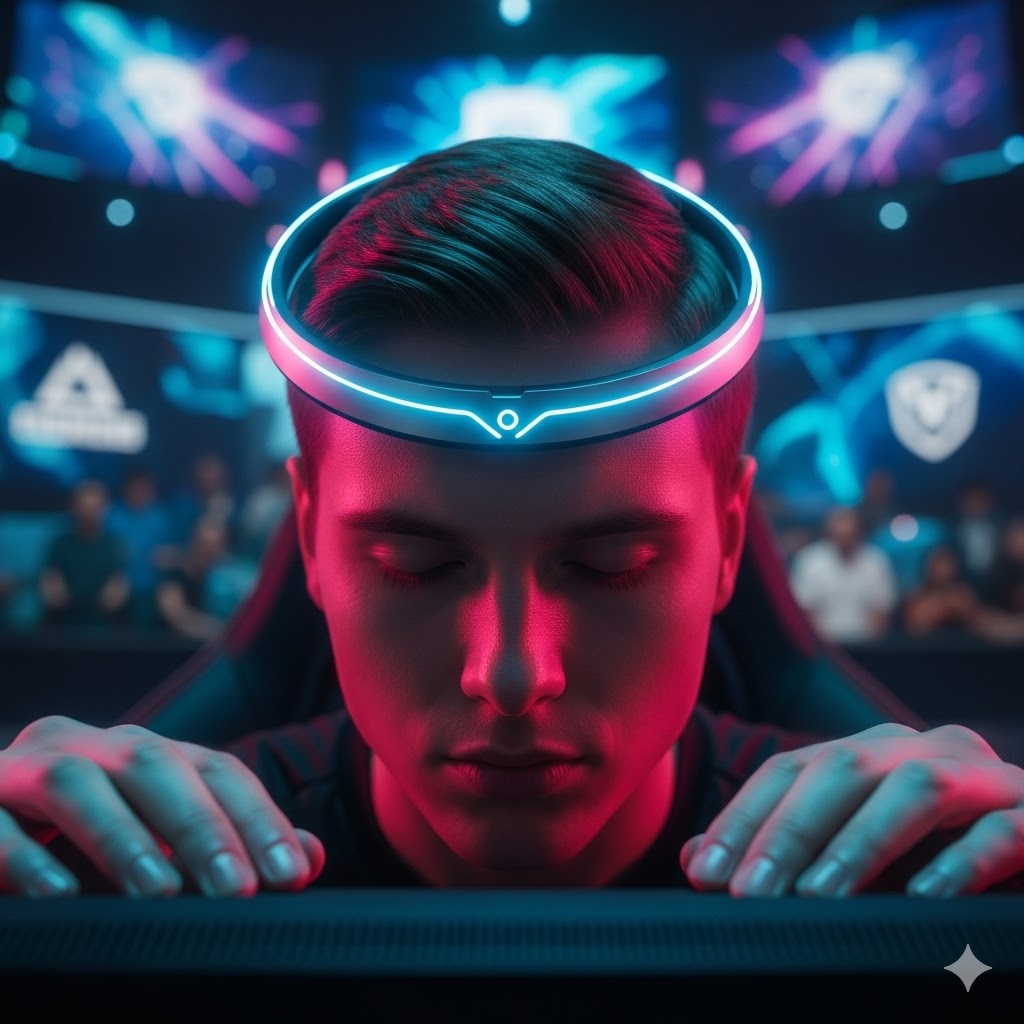
But in late 2025, that era is officially ending. The release of consumer-grade Brain-Computer Interfaces (BCI)—specifically Valve’s “DeckLink” and Sony’s “Neuro-Pulse”—has brought mind-controlled gaming to the mainstream. It is no longer a science fair experiment. It is here, it is affordable, and it is tearing the global geek community apart.
The “Thought Lag” Advantage: Why Pros Are Retiring Why use a thumb to press ‘X’ when you can just think ‘Jump’? To understand why controllers are dying, we have to look at biology. In traditional esports, human reaction time is capped by physics. The average pro gamer takes about 150 to 200 milliseconds to react to a visual stimulus (seeing an enemy) and physically click a mouse.
With the new 2025 consumer BCI headsets, that latency drops to near zero. “It feels like cheating,” says ‘Viper’, a former Counter-Strike champion who announced his retirement last week. “I saw the enemy, and before my nerve impulses could even reach my finger, the kid with the neuro-headset had already headshot me. His brain sent the signal directly to the server. Physical gamers are obsolete.”
In competitive play, a 150ms advantage is not a margin; it is a chasm. This has led to the formation of separate “Neural Leagues” and “Mechanical Leagues,” with the latter viewership plummeting.
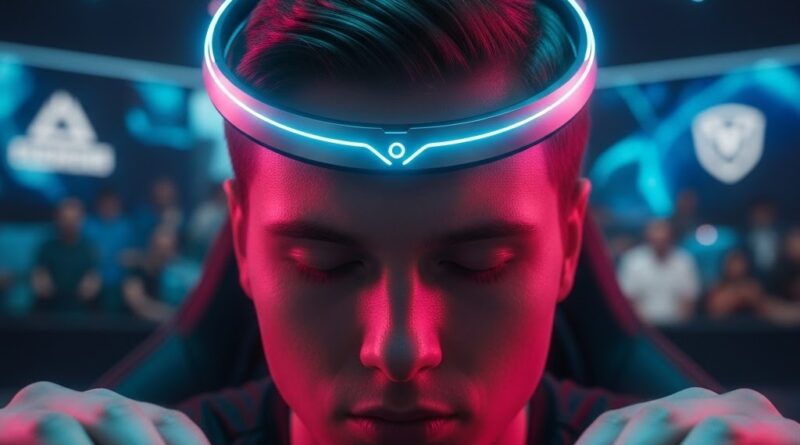
The Hardware: No More Gel, No More Wires Early BCIs required messy conductive gel and looked like medical equipment. The 2025 generation is sleek. The Sony Neuro-Pulse looks like a standard gaming headset, but the headband is lined with thousands of dry-polymer sensors. Using AI calibration (which takes about 5 minutes of “thinking” training), the headset maps your specific neural patterns for “Shoot,” “Jump,” “Reload,” and “Crouch.”
The accuracy is terrifyingly high. In our testing of Call of Duty: Black Ops 7, the headset distinguished between a “panic thought” and a “tactical decision” with 99% accuracy. The controller in your hand becomes a secondary device—used only for menu navigation, while the combat happens entirely in your mind.
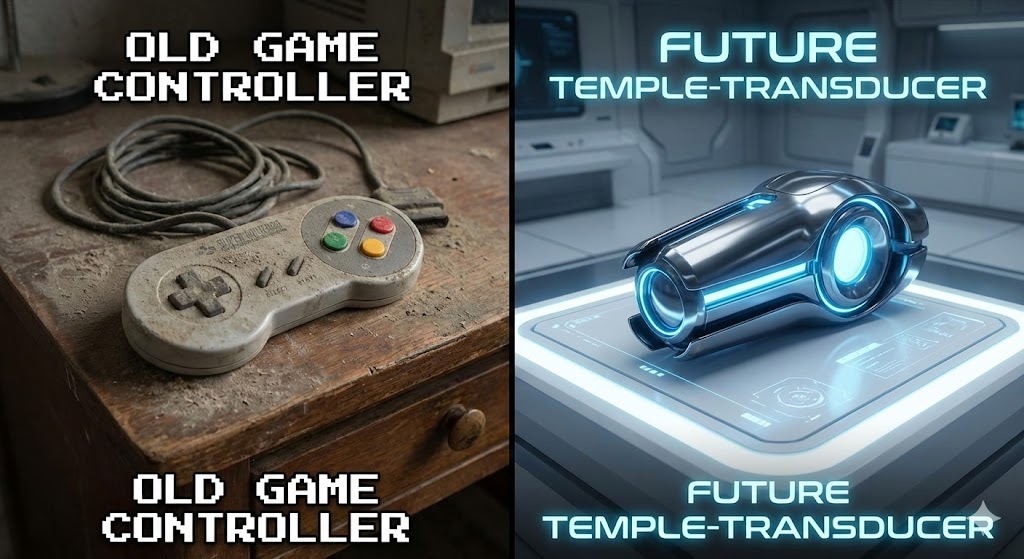
Immersion vs. Intrusion Walk into a GameStop or Best Buy today, and you’ll see the shift. The aisles for “Controllers & Keyboards” are shrinking. The aisles for “Haptic Suits” and “Neural Bands” are expanding.
For geeks, this is a bittersweet transition. We loved the clicky sound of a Cherry MX Blue switch. We loved the weight of an Xbox controller. But the immersion offered by 2025 tech is undeniable. You don’t just play the game; you inhabit it. The feedback is bidirectional. When your character gets tired, the headset uses low-frequency pulses to induce a mild sense of “Phantom Fatigue” in your mind. When you cast a spell, your mind visualizes it, and the game executes it instantly.
The Privacy Nightmare: Read/Write Access to Your Brain Of course, it wouldn’t be 2025 without a dystopian twist. To play these games, you are granting game publishers read-write access to your motor cortex.
A hacker group known as Synapse recently exposed that a popular MMO was harvesting “emotional data” from players. The game was tracking exactly what scares a player (spike in amygdala activity) or what makes them happy (dopamine release). This data was allegedly sold to advertisers. Imagine an ad system that knows exactly when you are emotionally vulnerable and shows you a micro-transaction at that exact millisecond.
- “You seem frustrated. Buy this weapon pack to win instantly?” This isn’t science fiction. It is the business model of gaming in 2026.
The Health Crisis: “Neural Burnout” Doctors are also reporting a new condition called “Neural Burnout.” Physical muscles get tired, forcing you to stop playing. The brain, however, can be pushed much harder. Gamers are playing for 18 hours straight, firing neurons at maximum intensity, leading to seizures, migraines, and dissociation from reality. The warning labels on these headsets are getting bigger, but just like cigarette packs in the 90s, nobody is reading them.
Verdict: Adapt or Die? Geek culture is currently split into two camps:
- The Purists: Those who stick to mouse-and-keyboard servers (now a niche, “retro” hobby, similar to the [Analog Rebellion] we discussed earlier).
- The Next-Gens: Those who have embraced the neural link to achieve god-like reflexes.
Whether we like it or not, the barrier between the player and the pixel has dissolved. The controller is dead. Long live the mind.