Shadow Empire: The Real Reason Washington Cannot Seize Venezuela’s Oil (It’s Not About Democracy)
WASHINGTON D.C. — In the chaotic forty-eight hours following the dramatic, midnight extraction of Nicolás Maduro from Caracas to a federal holding cell in New York, the world has been asking one singular, terrifying question: Who is actually in charge of Venezuela right now?
On Saturday, President Donald Trump gave an answer that sent shockwaves through the United Nations and the halls of Congress. With his characteristic bluntness, he declared that the United States would “run” the South American nation until a transition could be secured. It was a statement that smelled of colonialism, reminiscent of the early 20th-century gunboat diplomacy.
But by Sunday morning, the narrative had shifted.
Secretary of State Marco Rubio, the architect of this aggressive Latin American policy, took to the airwaves to perform a sophisticated diplomatic clean-up operation. The message was clear: The United States is not interested in paving the roads or collecting the garbage in Caracas. Instead, Washington will enforce a suffocating “Oil Quarantine.”
At Daily Dejavu, we analyze this stark pivot. Is this a disagreement between the President and his top diplomat, or is it a calculated “Good Cop, Bad Cop” routine designed to break the will of the remaining Chavista regime?
Part I: The Walk Back – Governing vs. Leveraging
To understand the confusion, we must look at the conflicting rhetoric emerging from the White House.
The President’s Promise: Standing before reporters in Florida on Saturday, President Trump was unequivocal. He repeated the phrase “we’re going to run the country” more than half a dozen times. To the ears of his “America First” base—who are generally allergic to foreign nation-building—this sounded like a potential quagmire. To international observers, it sounded like an occupation.
The Secretary’s Correction: Marco Rubio, appearing on CBS’s Face the Nation on Sunday, offered a far more nuanced, and perhaps cynical, interpretation. “We are not going into a day-to-day governing role,” Rubio suggested, attempting to temper fears of a prolonged US occupation akin to Iraq or Afghanistan.
Instead, Rubio introduced the concept of the “Oil Quarantine.” This is not boots on the ground in every city; it is ships in the sea blocking every port. “We continue with that quarantine,” Rubio explained. “That’s a tremendous amount of leverage that will continue to be in place until we see changes.”
Analysis: Rubio is effectively saying that the US will control Venezuela’s oxygen (money/oil), but will leave the administration to the locals. It is a strategy of remote control. By controlling the oil tankers, Washington controls the paycheck of every soldier and bureaucrat in Venezuela, effectively ruling the country without needing to station a single Marine in the presidential palace.
Part II: What is an “Oil Quarantine”?
The term “Quarantine” is historically loaded. It was famously used by President John F. Kennedy during the Cuban Missile Crisis to avoid using the word “Blockade” (which is an act of war).
In the context of Venezuela 2026, the Oil Quarantine is a sophisticated economic weapon. Venezuela has the largest proven oil reserves in the world. However, under Maduro, production plummeted. What remains is their only lifeline.
How the Quarantine Works:
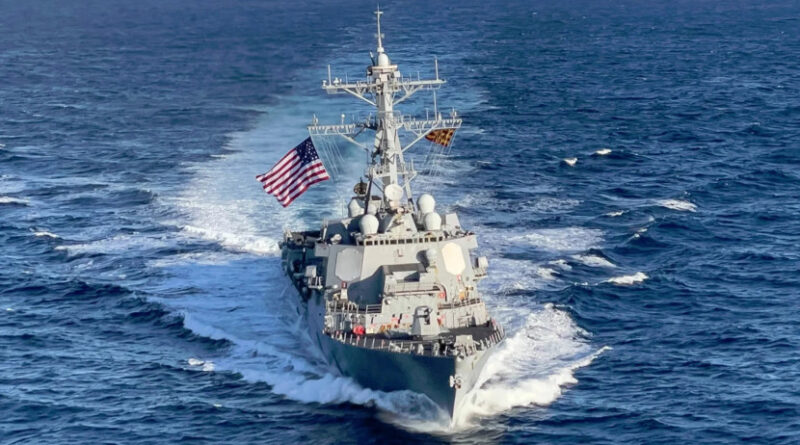
- The Naval Blockade: US Navy and Coast Guard assets are currently patrolling the Caribbean Sea and the eastern Pacific.
- Sanctioned Tankers: Any ship attempting to pick up Venezuelan crude oil is immediately designated as “sanctioned.”
- Seizure: As Rubio noted, some of these tankers have already been seized by US forces.
- The Squeeze: Without the ability to export oil, the interim government in Caracas has zero revenue. They cannot buy food, medicine, or—most importantly for stability—loyalty from the military.
Rubio’s strategy is brutal but efficient. He is betting that the remaining structure of the Maduro regime will collapse or conform to US demands simply because they will run out of cash within weeks. “We’re going to judge everything by what they do,” Rubio said, referring to Maduro’s subordinates who are currently trying to hold the fort.
Part III: The Ghost of Iraq and the “America First” Dilemma
Why was Rubio so quick to correct Trump? The answer lies in domestic American politics.
The Republican coalition is currently fractured. On one side, there are the interventionist hawks (like Rubio) who view Latin America as America’s backyard. On the other side, there is the MAGA base, which is deeply suspicious of “forever wars.”
When Trump said, “We’re going to run the country,” flashbacks of Baghdad in 2003 and Kabul in 2001 flashed through the minds of political strategists.
- The Iraq Trap: In 2003, the US broke the Iraqi government and then spent 20 years and trillions of dollars trying to fix it.
- The Venezuela Fear: Critics argue that if the US takes responsibility for “running” Venezuela, it also takes ownership of its hyperinflation, its crime rate, and its poverty.
Rubio dismissed these comparisons with a geopolitical distinction. “The whole foreign policy apparatus thinks everything is Libya, everything is Iraq,” Rubio scoffed. “This is not the Middle East. This is the Western Hemisphere.”
This statement reveals the core of the new doctrine: The US claims a special right to intervene in the Americas (a revival of the Monroe Doctrine) that it does not claim elsewhere. Rubio argues that a stable Venezuela is a matter of US homeland security, citing drug trafficking as the primary threat, rather than just abstract “democracy promotion.”
Part IV: The Midnight Extraction – A Scene from a Movie
While the politicians argue about definitions, the reality of what happened on Saturday morning is vital to understand.
It was an operation that will be studied in military academies for decades. Nicolás Maduro, the man who defied sanctions for years, was plucked from his bed in a fortified military base in Caracas. The operation was swift, silent, and overwhelming.
The Timeline:
- Late Friday Night: US Special Operations forces, likely supported by intelligence assets on the ground, breached the perimeter.
- The Extraction: Maduro and his wife, Cilia Flores, were secured.
- The Flight: They were flown out of Venezuelan airspace before the local air force could scramble.
- The Arrival: Late Saturday afternoon, a small jet touched down in a private airfield in New York’s northern suburbs.
The images released later were surreal. A video from a White House account showed Maduro, clad in a tracksuit, being escorted by two DEA agents. He was smiling—a bizarre expression for a man facing life imprisonment. He was whisked away in an armored convoy to a federal facility in Manhattan, where he awaits trial on “Narco-Terrorism” charges.
The Charge Sheet: The Justice Department has painted Maduro not just as a dictator, but as a drug lord. The indictment, unsealed in 2020 and updated Saturday, accuses his administration of flooding the US with cocaine, using the state apparatus to facilitate cartel operations. This legal framing is crucial—it justifies the military operation not as a “coup,” but as a “law enforcement arrest.”
Part V: The Legal Grey Zone
Did the United States break international law? This is the debate raging in law schools and UN chambers today.
The “Imperialist” Argument: Maduro’s Vice President, Delcy Rodriguez, who has been named interim president by the country’s high court, called the operation an act of “imperialist kidnapping.” She demanded Maduro’s immediate release. From the perspective of sovereignty, entering a foreign nation and abducting its head of state is a clear violation of the UN Charter.
The “Just Cause” Argument: The US argues that Maduro was not a legitimate president (citing the flawed 2018 and 2024 elections) and that he was a fugitive criminal. Rubio and the Trump administration are leaning heavily on the “Self-Defense” justification, arguing that the drugs flowing from Venezuela constitute a direct attack on American citizens.
Experts are divided. Some legal scholars compare this to the 1989 Invasion of Panama, where the US deposed and arrested dictator Manuel Noriega on drug charges. While effective, that operation was widely condemned internationally at the time. “It stretches the boundaries of international law until they snap,” noted one legal expert from Geneva. “If any country can simply arrest the leader of another country they dislike, the entire diplomatic system collapses.”
Part VI: Caracas in Shock – The Morning After
What is life like in Venezuela today? Reports from Caracas describe a capital city in a state of suspended animation.
Sunday is usually a lively day in Caracas. The roads are typically closed for cyclists and runners. But this Sunday, the streets were empty.
- Businesses Closed: Convenience stores, gas stations, and markets remained shuttered.
- Military Presence: The Presidential Palace, Miraflores, is surrounded by armed civilians (the Colectivos) and uncertain military units.
- The Silence: It is a silence born of confusion. No one knows who to obey.
David Leal, a 77-year-old parking lot attendant in Caracas, summarized the national mood to reporters: “People are still shaken.” The Venezuelan people are caught between hope and terror. Many despise Maduro for the economic collapse, but the sight of a foreign power forcibly removing their leader creates a complex sense of humiliation and fear of civil war.
With Delcy Rodriguez claiming the presidency from the palace, and the US controlling the oil revenues from the sea, a power struggle is inevitable. Will the Venezuelan military stick with Rodriguez and starve? Or will they bow to the “Oil Quarantine” and form a transitional government approved by Rubio?
Part VII: What Happens Next?
The next few days are critical. Maduro is due to appear in a Manhattan federal court on Monday. The visual of a Latin American president in a US dock will be broadcast globally.
The US Strategy: Rubio is banking on a quick capitulation. He hopes that by squeezing the oil revenue, the military generals will realize that Rodriguez cannot pay them. The “Oil Quarantine” is designed to force a negotiation, not a war.
The Risks:
- Civil War: If the Colectivos and loyalist military units decide to fight, Caracas could turn into an urban war zone.
- Refugee Crisis: Further instability could trigger another wave of migration towards the US border—ironically, the very thing the Trump administration wants to stop.
- Global Pushback: Russia and China, both of whom have heavy investments in Venezuela’s oil sector, have yet to make their major moves. They could challenge the US blockade, leading to a naval standoff in the Caribbean.
Conclusion: Donald Trump’s claim that “We are going to run Venezuela” may have been hyperbole, but Marco Rubio’s “Oil Quarantine” is a very real, very tangible chokehold. The United States may not be paving the streets of Caracas, but by controlling the flow of black gold, it effectively holds the keys to the country’s future. For the people of Venezuela, the “Liberation” feels suspiciously like a siege.
As the sun sets on a quiet, fearful Caracas, the world waits to see if the “Oil Quarantine” brings democracy, or just more hunger.