
The Dancing Plague of 1518: When Humans Literally Danced to Death
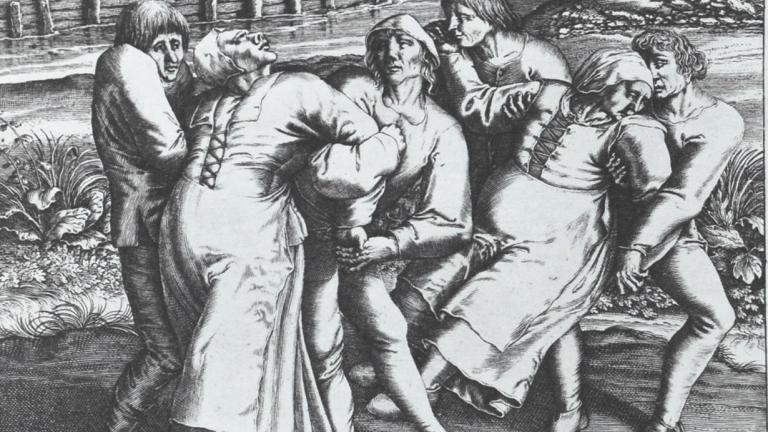
- Prompt/Search: “Medieval woodcut style illustration of people dancing frantically in the streets of Strasbourg, 16th century, chaotic and eerie atmosphere.”
- Caption: It started as a party, it ended as a funeral.
If you think your friends party too hard, wait until you hear about the residents of Strasbourg in July 1518.
This isn’t a myth. It’s a documented historical event that still baffles scientists, historians, and doctors 500 years later. It’s known as the Dancing Plague, and it is exactly what it sounds like.
The First Move
It started with one woman: Frau Troffea. One random afternoon, she stepped into the narrow street and began to dance. There was no music. There was no celebration. She just danced.
She danced for hours. Then days. Her feet were bleeding, her face was soaked in sweat, but she couldn’t stop. Within a week, 34 others had joined her. Within a month, the crowd had swelled to 400 people.

- Prompt/Search: “Old painting of a medieval doctor looking confused at a crowd of dancing peasants, Renaissance art style.”
- Caption: Doctors at the time had a terrible prescription: “Just let them dance it out.”
The Fatal Prescription
Here is where the story gets truly bizarre. The city council, worried about the chaos, consulted local doctors. The medical opinion? “Overheated blood.”
Their solution? More dancing.
The authorities believed the victims simply needed to “shake it out of their system.” So, they did the worst thing possible:
- They built a wooden stage.
- They hired professional musicians.
- They cleared the grain market to make a dance floor.
It backfired. The music only encouraged them. People started collapsing from exhaustion, strokes, and heart attacks. They were literally dancing themselves into the grave.
Mass Hysteria or Poisoned Bread?
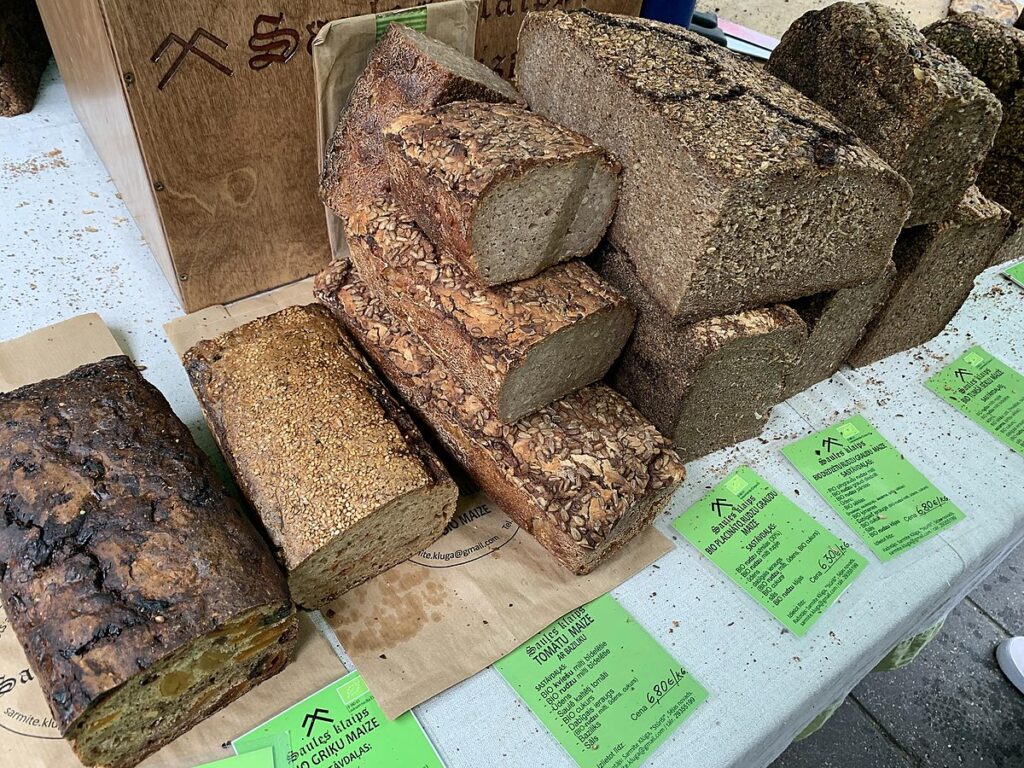
- Prompt/Search: “Close up of Rye bread with dark mold (Ergot fungus), dramatic lighting.”
- Caption: Was a moldy loaf of bread the culprit behind the madness?
So, what actually happened? Modern historians have two main theories:
- Ergotism: A toxic mold that grows on damp rye bread. It can cause hallucinations and spasms (similar to LSD).
- Stress-Induced Psychosis: The region was suffering from famine and disease. The psychological stress was so high that it triggered a “mass psychogenic illness”—a collective breakdown where the brain forces the body to act irrationally.
Whatever the cause, the Dancing Plague serves as a grim reminder: The human brain is a fragile, terrifying machine.