
The Day the Internet Dies: Why a “Carrington Event” Could Send Humanity Back to the Stone Age
Imagine waking up tomorrow morning. You reach for your phone, but it’s dead. You try to turn on the lights, but the switch does nothing. You look outside, and the entire city is dark. You go to your car, but the GPS chips are fried. You walk to the ATM to get cash, but the banking network is offline.
This isn’t the plot of a zombie movie. It is a very real scientific possibility known as a Geomagnetic Storm. In 1859, the Sun fired a warning shot at Earth known as the Carrington Event. Back then, we only lost telegraph machines. If it happened today, in our hyper-connected 2025 world, it wouldn’t just be an inconvenience. It would be the end of modern civilization as we know it.
The History: Telegrams on Fire On September 1, 1859, British astronomer Richard Carrington observed a massive flare of white light on the surface of the Sun. Seventeen hours later, chaos struck Earth. Auroras (Northern Lights) were so bright that people in the Caribbean could read newspapers at midnight. Miners in the Rocky Mountains woke up and started making breakfast, thinking it was morning.
But the technology suffered. The telegraph system—the “Internet” of the Victorian era—went haywire. Pylons threw sparks. Telegraph operators received electric shocks through their equipment. Some machines even continued to send messages after being unplugged from their batteries, powered solely by the electricity in the air. The world paused, shrugged, and moved on. Because back then, electricity was a novelty, not a necessity.
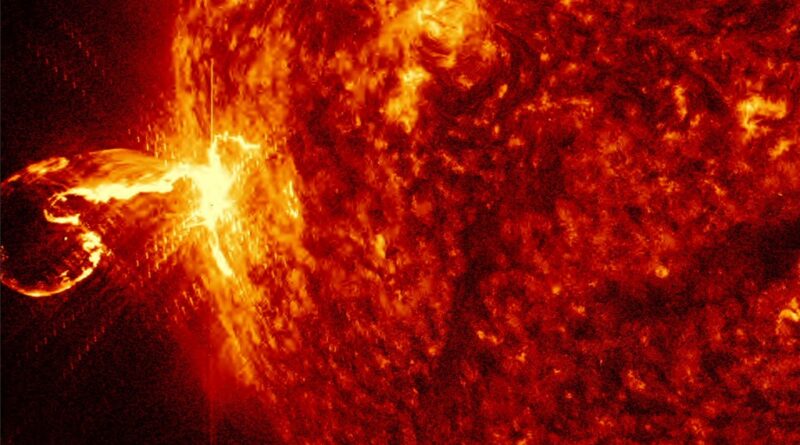
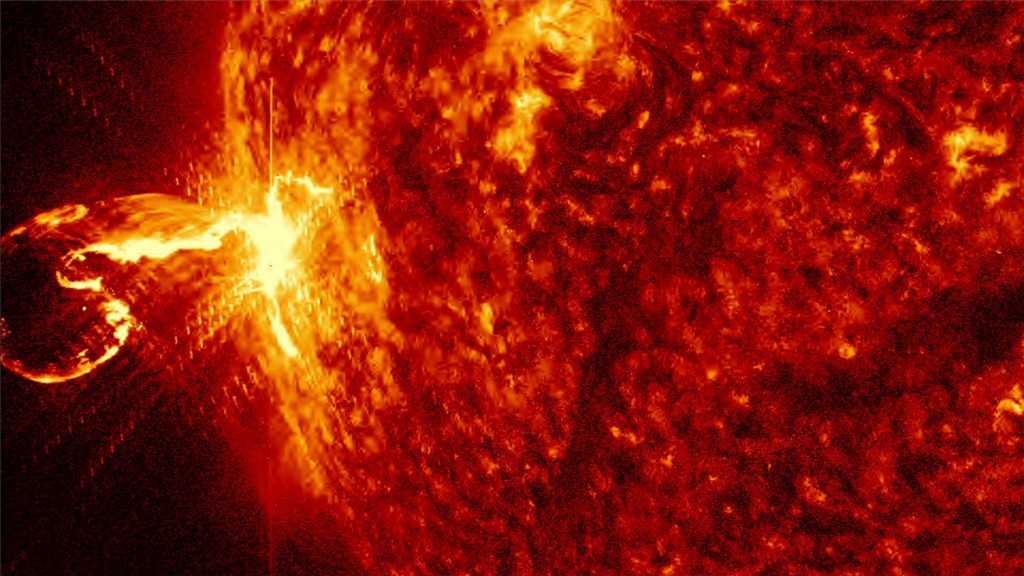
The Science: What is a CME? The Sun is not a lightbulb; it is a violent ball of nuclear fusion (as we discussed in our [Nuclear Fusion] article). Occasionally, it burps out a massive cloud of plasma and magnetic fields known as a Coronal Mass Ejection (CME). Think of it as a “Solar Tsunami.”
Most CMEs miss Earth. Some graze us (causing pretty auroras). But a direct hit from a Carrington-class CME acts like a massive EMP (Electromagnetic Pulse). It induces massive electrical currents in anything long and metallic—like power lines, undersea cables, and pipelines.
The 2025 Nightmare Scenario If a storm of that magnitude hits us today, the telegraph sparks of 1859 would look like a joke.
- The Grid Melts: The massive surge of induced current would melt the copper windings inside giant High-Voltage Transformers. These aren’t parts you can buy at Home Depot. They take 12 to 18 months to custom build.
- No Internet: While fiber optic cables are glass (and safe), the “Repeaters” that boost the signal under the ocean are powered by copper. They would fry. The World Wide Web would physically snap.
- Satellites Die: GPS satellites would be knocked offline. Airplanes would be grounded. Stock markets would freeze.
The Economic Collapse: The Cashless Trap Here is where it gets terrifying. We have sprinted towards a [Cashless Society]. We rely on digital ledgers and cloud banking. In a Carrington Event, that data becomes inaccessible. If the servers fry, your bank account balance is just a theory. You cannot tap your card. You cannot Venmo. Suddenly, the only people with purchasing power are the ones with physical cash, gold, or tradable goods. The entire “Digital Economy” evaporates in seconds.
Are We Ready? (Spoiler: No) Governments know this is coming. The US and UK have “Space Weather” monitoring centers. But protecting the grid is expensive. It would cost billions to “harden” the power grid with capacitors and Faraday cages. Most utility companies, driven by profit, haven’t done it.
We are playing Russian Roulette with the Sun. In 2012, a Carrington-class storm missed Earth by just nine days. If the Earth had been in a slightly different position in its orbit, you wouldn’t be reading this article online right now.
Conclusion: The Vindication of Analog This scenario proves why the [Analog Rebellion] isn’t just a hipster trend; it’s a survival strategy. The people collecting physical books, vinyl records, and mechanical watches aren’t just nostalgic. They are building an archive that doesn’t require a grid to function.
Technology is amazing. AI is miraculous. But never forget that our entire digital god is built on a fragile wire, waiting for the Sun to decide when to pull the plug.
Read Also: Vacation in Orbit: Space Hotels Are Coming Sooner Than You Think