The Dragon’s Upgrade: Why China’s Tech Juggernaut Is No Longer Just About Cheap EVsURL Slug
SHANGHAI — For the past decade, the global narrative surrounding China has been consistent, predictable, and—as it turns out—dangerously outdated. The story went something like this: China is the world’s factory. They flood markets with cheap goods, they copy Western intellectual property, and they win by “dumping” excess inventory at rock-bottom prices.
But as we close out 2025, that narrative isn’t just wrong; it is a strategic blind spot.
While Western media obsesses over tariff wars and market dumping, a far more significant transformation has taken place. Look beyond the market dynamics, and you will see a technological juggernaut at play. We are witnessing an industrial ecosystem so advanced, so well-resourced, and so startlingly agile that the traditional giants of industry—from Detroit to Stuttgart, from Silicon Valley to the Pentagon—are struggling to comprehend the scale of the challenge.
This is not about cheap labor anymore. This is about raw, unadulterated engineering dominance.
At Daily Dejavu, we are peeling back the layers of this “Dragon’s Upgrade” to understand how China moved from being the world’s assembly line to becoming its R&D lab—and what this means for the precarious balance of global power.
Part I: The Xiaomi Shock – A Case Study in Agility
Nothing illustrates this terrifying speed better than the story of Xiaomi.
For years, we knew Xiaomi as the maker of good, affordable smartphones—the “Apple of the East” for budget-conscious consumers. But the company’s recent pivot to automotive engineering is not just a business expansion; it is a masterclass in industrial warfare.
The Trigger: American Sanctions
As CEO Lei Jun recounts, the spark wasn’t ambition, but survival. In January 2021, the Joe Biden administration placed initial tariffs and restrictions on the firm. It was a wake-up call. Rather than cowering, Xiaomi vowed to inoculate itself against foreign pressure. Two months later, in March 2021, they made a shocking announcement: Xiaomi would build Electric Vehicles (EVs) from scratch.
In the traditional automotive world, developing a new car platform from a blank sheet of paper takes 5 to 7 years. Xiaomi did it in three.
The Result: The SU7
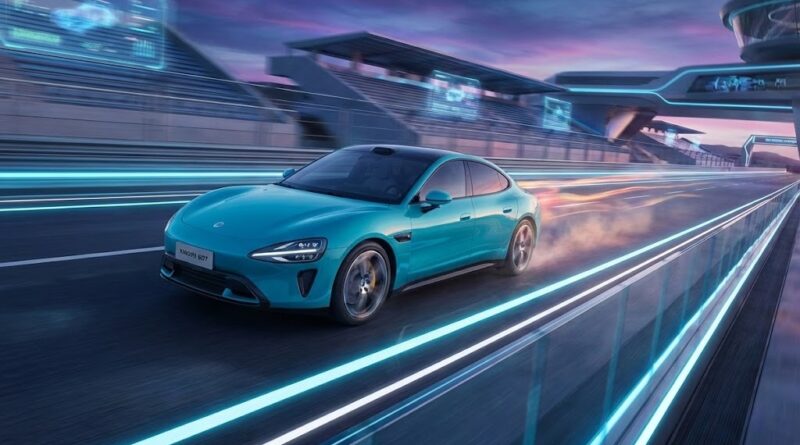
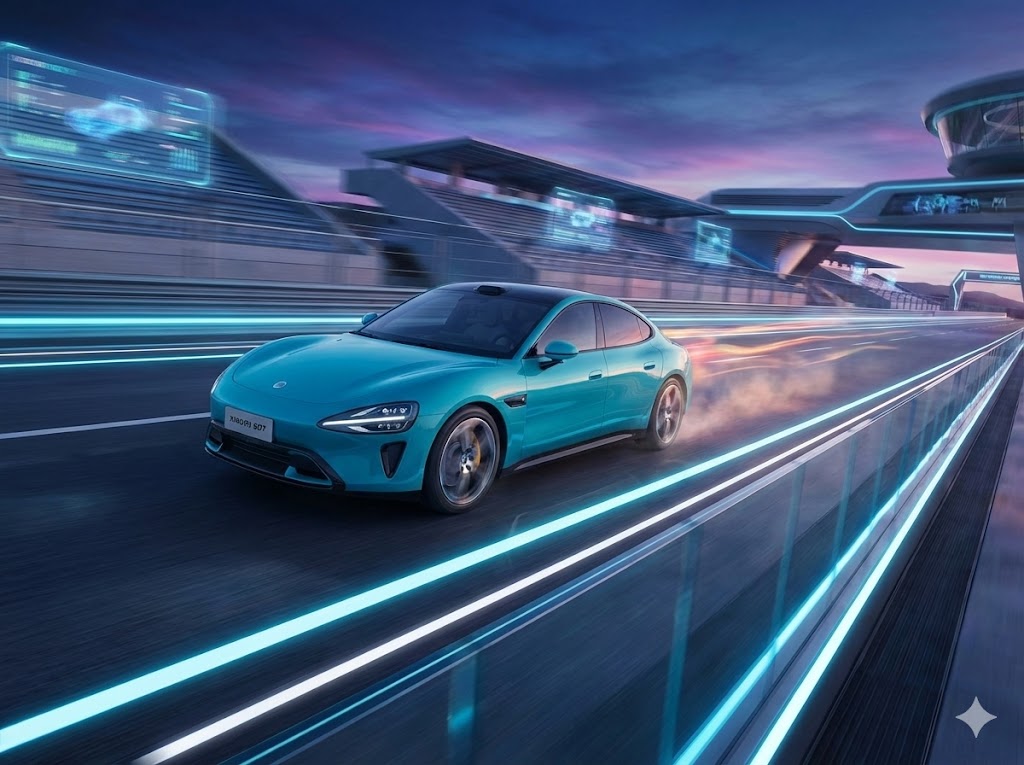
In March 2024, Lei Jun unveiled the Xiaomi SU7. And it wasn’t a cheap knockoff. It was a monster.
- Speed: Swifter than a Porsche Taycan.
- Endurance: Longer range than a Tesla Model S.
- Performance: A few months ago, it clocked 359.7 km/h on Germany’s legendary Nurburgring racetrack, shattering records in the Electric Executive Car category. It actually exceeded its own claimed top speed of 350 km/h.
This achievement sent shockwaves through European boardrooms. Is it any surprise that European carmakers have stopped complaining about China stealing their secrets? The tables have turned so dramatically that today, European giants like Volkswagen and Stellantis are insisting that China share its technology with them in exchange for market access.
It is a historic reversal of fortune. The students have become the masters, and the “teachers” in Europe are now scrambling to buy the textbooks they once refused to sell.
Part II: The Green Energy Hegemony
While the United States, under shifting administrations, oscillates between “Green New Deals” and a “Drill, Baby, Drill” return to fossil fuels, China has been playing a different game entirely. They are playing for keeps.
China’s lead in the emerging field of renewables is not just a gap; it is a chasm. As the US anchors itself to the past—pumping record amounts of oil, gas, and coal—China has effectively cornered the market on the future.
“China’s impact globally will be even bigger because they get less competition in the fastest-growing industrial areas globally, which are solar, wind, batteries – and EVs,” noted energy sector analyst Jarand Rystad recently.
The AI Energy Paradox
This dominance extends to the hottest topic of 2025: Artificial Intelligence. The US may still hold a slight edge in the most advanced microchip designs (thanks to NVIDIA and tight export controls). However, AI needs two things: Chips and Power. Massive amounts of power.
China generates so much electricity that its storage and grid capacity actually struggle to keep up with generation—a “good” problem to have. Meanwhile, American consumers are facing energy bills rising at twice the pace of inflation. Utility companies in the US are failing to build capacity fast enough to feed the voracious appetite of AI data centers.
In the AI war, chips are the engine, but electricity is the fuel. China has the fuel. The US is running on fumes.
Part III: The Military Leapfrog
If Xiaomi’s speed scares Detroit, then the Fujian Aircraft Carrier should terrify the Pentagon.
Chinese leapfrogging is showing up vividly in the defense sector. For decades, the People’s Liberation Army Navy (PLAN) was dismissed as a “Brown Water Navy”—capable only of coastal defense. Today, it is the largest navy in the world by hull count, and its sophistication is matching its size.
The Fujian & EMALS
On November 5, President Xi commissioned the nation’s third carrier, the Fujian. But this isn’t just a copy of an old Soviet design. The Fujian features an Electromagnetic Aircraft Launch System (EMALS).
Why does this matter? Before this, only the US Navy’s most modern (and troubled) carrier, the Gerald R. Ford, possessed EMALS technology. This system allows for launching heavier, faster jets and drones with more precision than traditional steam catapults. China developed, tested, and deployed this tech in record time, skipping the “steam catapult” generation entirely.
The Missile Gap
The prowess isn’t theoretical. It has been tested in the field. In skirmishes and standoffs along the India-Pakistan border, reports indicate that China-supplied PL-15 air-to-air missiles used by the Pakistan Air Force performed impressively against India’s French-made Rafale jets—so-called “4.5-generation” warplanes.
And the PL-15 is merely the appetizer.
- PL-17 and PL-21: These next-gen missiles fly faster, have longer ranges, and are designed to target critical support assets like AWACS and aerial tankers, effectively blinding enemy air forces.
- Battlefield Robotics: It is an easy bet—almost a certainty—that the People’s Liberation Army (PLA) will be the first military to introduce fully autonomous humanoid robots on the battlefield, leveraging their massive manufacturing base.
Part IV: Resilience & The Failure of Sanctions
Strength needs to be measured not just by raw power, but by a nation’s ability to take a punch.
The narrative from Washington has been one of “containment.” The Trump tariffs, followed by Biden’s chip bans, and then more tariffs, were designed to cripple the Chinese economy. They failed.
No doubt, these measures were “sand in the wheels” of the Chinese economy. But they were anything but a hard brake. Instead of collapsing, Beijing adapted with ruthless efficiency.
- Trade Diversification: Beijing steadily worked to diversify its trade basket. Today, it counts ASEAN as its top trading partner, followed by the European Union. America is only No. 3 on that list.
- The “Fitness Center” Effect: As one awed Western businessman described it, China remains the “fitness center for global manufacturing.” If you can survive the brutal competition inside China, you can dominate anywhere.
This internal competition—often called “Involution”—is fierce. It has sent many Chinese firms into bankruptcy and forced massive price-cutting. But biologically speaking, it is evolution on steroids. The companies that survive this “gladiator pit” (like BYD, Xiaomi, and DJI) emerge as hardened, hyper-efficient entities that Western companies simply cannot compete with on price or innovation.
Part V: State Capacity – Fixing the Sky
Why focus only on guns and microchips? Look at the way China handles existential threats like ecology.
We all remember the Beijing Olympics era. The spectacular sunsets in Beijing were caused by light refracting off terrible atmospheric pollution. “Beijing Cough” was a global meme. Today, those smoggy sunsets are a distant memory. The Chinese capital’s “good air days” have risen dramatically.
The Green Wall
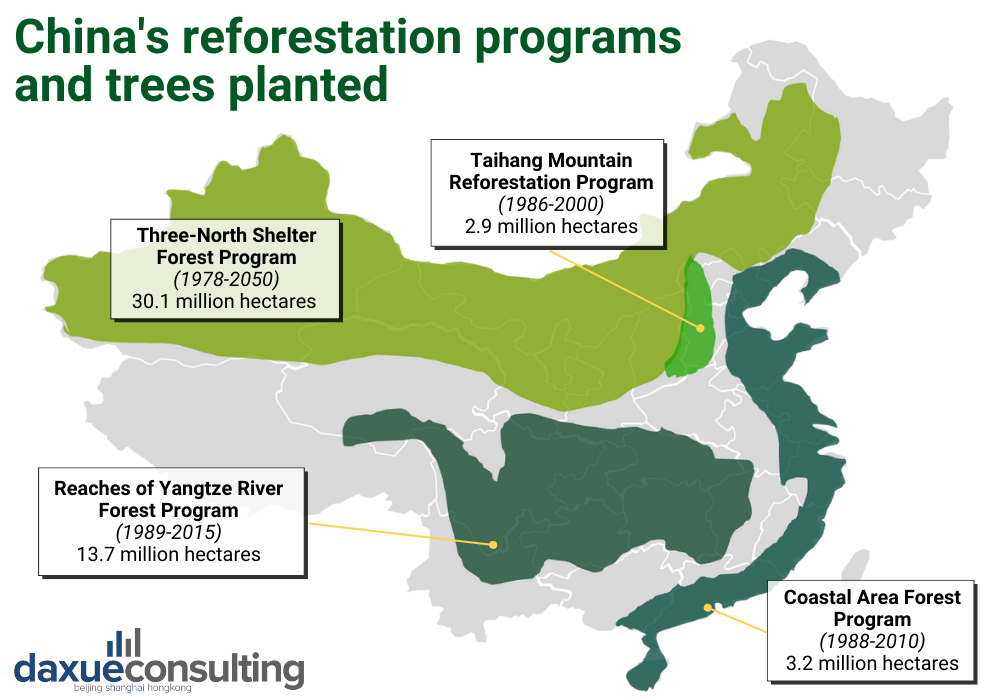
Since 2001, China has reforested no less than 425,000 square kilometers of land. To put that in perspective: That is an area about the size of Japan. In the same period, neighboring Indonesia saw its forest cover shrink by about a fifth due to excessive logging.
This demonstrates “State Capacity”—the ability of a government to identify a problem and mobilize massive resources to fix it instantly. While democratic nations debate and filibuster, China simply acts. The global attention on poor air quality has now shifted from Beijing to the nightmarish toxic air over Delhi and northern India.
Part VI: The “G1” Nightmare – A World Without Balance
So, Beijing’s goal has shifted. It is no longer about “Catching Up” to America. Today, they seem confident they can surpass it.
But what does a world dominated by China look like? This is where the awe turns into anxiety. A “G2” world (US and China sharing power) might be unstable, but a “G1” world (China alone at the top) is a terrifying prospect for its neighbors.
The Bully in the Playground
China’s behavior toward other nations gives us a glimpse of this future:
- Japan: China recently attempted to cow the new Japanese Prime Minister, Sanae Takaichi—leader of a G7 nation and advanced economy.
- Australia: When Canberra asked for an investigation into the origins of COVID-19, China weaponized trade, putting a crushing squeeze on Australian wine and lobster.
- South Korea: Punished economically for allowing the US to install the THAAD missile defense system.
- India: Despite India gaining “Major Power Status” in 2025, petty harassment continues. An Indian woman transiting Shanghai was harassed simply because her birthplace was Arunachal Pradesh—a region China claims.
The Weaponization of Everything
Beijing’s recent threat to weaponize Rare Earth metals—in response to fresh American tariffs—shows that Beijing is not nervous about taking on even the US. These metals are essential for everything from iPhones to fighter jets.
For smaller nations, the pressure is suffocating.
- Indonesia: Jakarta seems intimidated, considering buying Chinese fighter jets even as Beijing claims a significant part of Indonesia’s exclusive economic zone in the Natuna Sea.
- Malaysia: Officials whisper about the dumping of industrial goods crushing local ethnic Chinese businesses, but dare not speak too loudly.
Conclusion: The Era of “China First”
The “Daily Dejavu” verdict is clear: The competition is no longer about market share. It is about the fundamental operating system of the world.
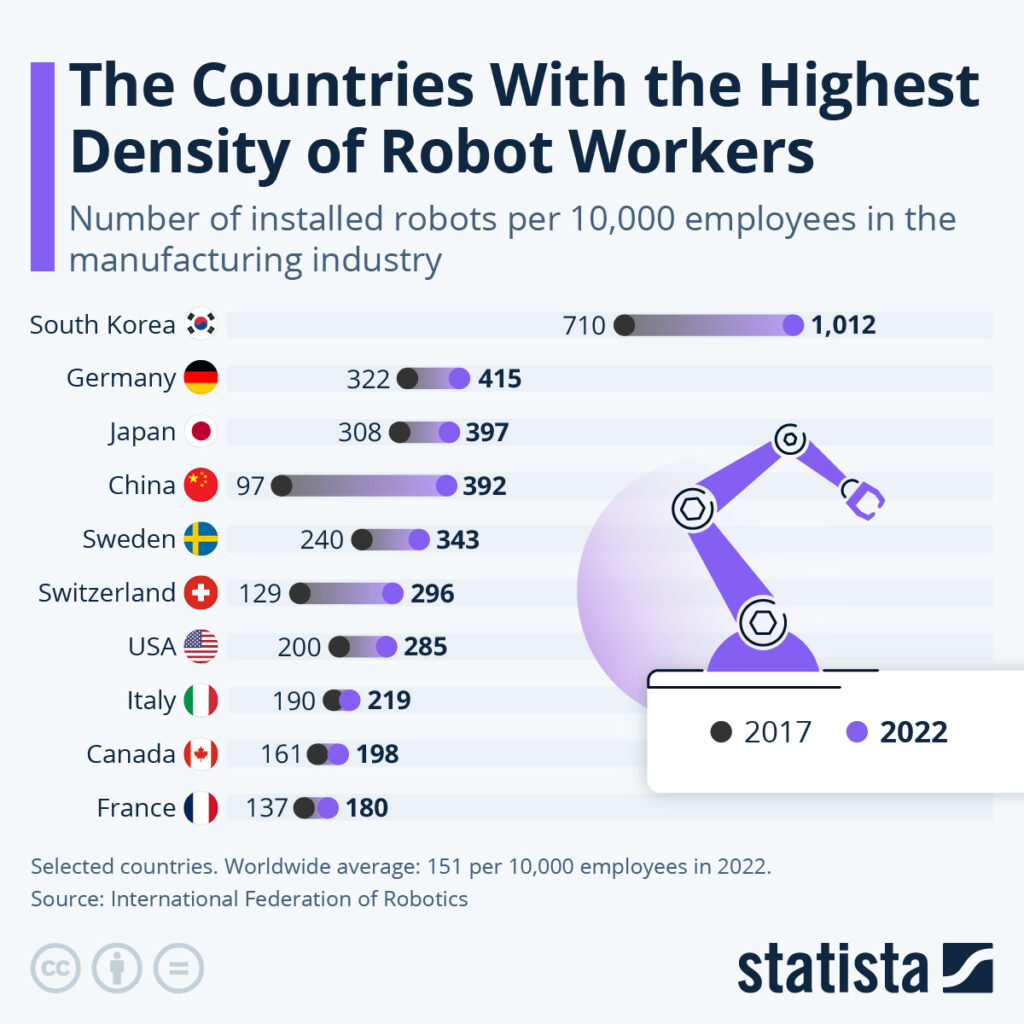
China has successfully transitioned from a copier to an innovator. Its factories are populated by over two million robots, growing by 300,000 a year. Its engineers are faster. Its military is modernizing at a pace that defies logic. And its political will is ironclad.
We used to worry about a “G2” world—a Cold War style standoff between Washington and Beijing. But as the US struggles with internal division, debt, and infrastructure decay, and as China accelerates its technological dominance, we might end up yearning for that standoff.
Because the alternative—G1—is G1 that you should fear. And looking at the specs of the Xiaomi SU7 or the deck of the Fujian carrier, that G1 world is no longer unthinkable