
The Myth of the Silent Night: Analyzing the Dark History of “Christmas Diplomacy” from 1914 to 2025
WASHINGTON D.C. — The calendar on the wall says December 28. The wrapping paper has been thrown away, the leftovers are in the fridge, and the world is drifting in that strange, liminal space between Christmas and New Year’s Eve.
But inside the Situation Rooms of the world’s major powers, there is no holiday break.
Reports swirling from the White House suggest that President Donald Trump is aggressively pushing for a “Christmas Peace Deal” to freeze the grinding conflict between Ukraine and Russia before the start of 2026. The timing is deliberate. Every December, political leaders reach instinctively for the language of goodwill. They want the photo-op: the signing ceremony under the tree, the gift of peace to a weary world.
But history tells a more complicated, and often bloodier, story.
The notion that the holiday season brings a respite from conflict is a romantic myth—one that sits uncomfortably alongside the brutal realities of statecraft. For every “Silent Night,” there has been a surprise attack. For every truce, there has been a betrayal.
At Daily Dejavu, we look past the tinsel to analyze the phenomenon of “Christmas Diplomacy.” Is it a genuine tool for de-escalation, or is the holiday season simply another weapon in the arsenal of modern warfare?
Part I: The Ghost of 1914 (The Anomaly)
To understand our obsession with holiday peace, we must travel back 111 years to the muddy trenches of Flanders.
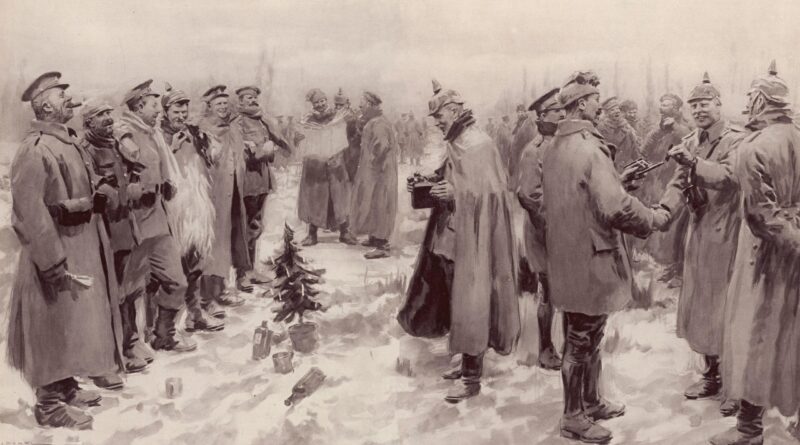
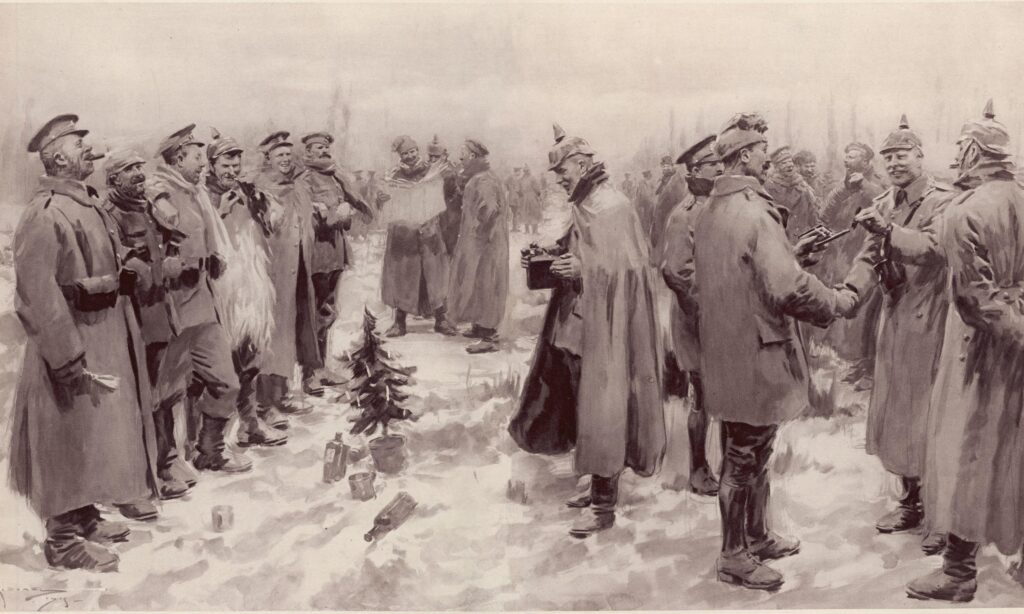
The Christmas Truce of 1914 remains the most enduring image of holiday humanity. We all know the story: German and British soldiers, defying orders from high command, climbed out of their trenches. They sang carols. They exchanged cigarettes and chocolates. They played football in No Man’s Land.
It is a beautiful story. It is also a dangerous one, because it convinces us that shared humanity can stop wars.
The Harsh Reality: What is often left out of the history books is that the 1914 truce was an anomaly, not a precedent. It was a mutiny of the spirit, not a diplomatic breakthrough. The generals were furious. In the years that followed (1915, 1916, 1917), High Command on both sides ordered heavy artillery barrages on Christmas Eve specifically to prevent fraternization. They learned that “peace” was bad for morale. If soldiers realized the “enemy” was just a freezing boy who missed his mother, they wouldn’t shoot to kill the next day.
The lesson of 1914 wasn’t that Christmas stops war. The lesson was that war requires the dehumanization of the enemy—and Christmas threatens that process. That is why, for the last century, military commanders have worked hard to ensure the guns don’t fall silent.
Part II: The “Grinch” Strategy (The Holiday Surprise)
While diplomats view Christmas as a chance to talk, generals view it as a chance to strike.
In military strategy, there is a brutal logic known as “The Holiday Surprise.” The theory is simple: In late December, political bandwidth in national capitals is thin. Presidents are on vacation. Parliaments are in recess. The diplomatic machinery moves slower. The guards are, quite literally, down.
History is littered with examples of nations exploiting the “Season of Goodwill” for maximum violence.
1. Vietnam (1964 & 1971)
The Vietnam War shattered the illusion of the sacred holiday.
- Christmas Eve, 1964: While US officers were celebrating at the Brinks Hotel in Saigon, Vietcong fighters detonated a car bomb. Two Americans died; dozens were injured. The message was clear: There is no sanctuary.
- 1971 Truce Violations: A declared 24-hour truce became a farce. The New York Times reported 170 violations by American and South Vietnamese forces and 19 by the Vietcong. The holiday wasn’t a pause; it was a cover for repositioning troops.
2. The Soviet Invasion (1979)
Perhaps the most cynical use of the calendar occurred in 1979. The Soviet Union launched its massive invasion of Afghanistan on Christmas Eve. Why? Because they knew the Western world—distracted by family dinners and religious services—would be slow to react. By the time Washington and London woke up from their holiday slumber, Soviet tanks were already in Kabul.
3. The Gaza Operation (2008)
Israel launched Operation Cast Lead on December 27, 2008. In the “dead zone” between Christmas and New Year, the international media cycle is sluggish, and diplomatic pressure takes longer to mobilize.
The pattern is undeniable. The holidays are not a shield against violence; they are a smokescreen. When the world looks at the Christmas tree, the strategist looks at the map.
Part III: The 2025 Context – Trump’s Gamble
Fast forward to today, December 2025. The war in Ukraine has ground on for nearly four years. The lines are frozen, literally and metaphorically.
President Trump’s push for a “Christmas Deal” follows a long tradition of leaders trying to force a breakthrough before the calendar turns.
- The Treaty of Ghent (1814): Signed on Christmas Eve to end the War of 1812 between the US and UK.
- The Northern Ireland Model: During The Troubles, the IRA often declared Christmas ceasefires (notably in 1974). It was a psychological tactic—showing the public they could turn the violence on and off like a tap.
Why Now? For Trump, a deal in late 2025 offers a “Nixon-in-China” moment. It utilizes the cultural pressure of the season. It is harder for Zelensky or Putin to say “No” to peace when the world is singing Silent Night. However, as we’ve seen in Colombia with the ELN guerrillas or in the Middle East, these holiday truces are often fragile. They are “Pauses,” not “Peaces.” They allow armies to rest, rearm, and rotate troops while the politicians shake hands.
If a deal is signed this week, we must ask: Is it a Treaty of Ghent (permanent)? Or is it a Vietnam Truce (a tactical lie)?
Part IV: The Soft Power of Booze and Trees
Not all Christmas diplomacy is about guns. Sometimes, it is about the “Lubrication of Statecraft.”
In a world of Zoom calls and encrypted telegrams, December remains the one month where old-school, face-to-face diplomacy thrives. Embassies around the world host legendary Christmas receptions. In these rooms, amidst the flow of expensive scotch and canapés, the real work often happens.
- A whisper between a US attache and a Chinese diplomat by the buffet.
- An informal apology offered over a glass of eggnog.
- Tensions de-escalated because, for one night, everyone is just wearing a bad sweater.
The Norwegian Spruce: Take the annual tradition of Norway sending a giant Christmas tree to London’s Trafalgar Square. Started in 1947, it is a thank-you for British support in WWII. It seems quaint, but it is a powerful geopolitical anchor. It is a ritual that renews the alliance every single year, visually reminding the public of shared sacrifice.
In 2025, as alliances fray and protectionism rises, these “Soft Power” rituals are the glue holding the international order together.
Part V: The Future – Do Drones Know It’s Christmas?
This brings us to the most unsettling question for the future of “Christmas Diplomacy.”
In 1914, the truce happened because soldiers looked each other in the eye. In 2025 and beyond, war is increasingly fought by algorithms, loitering munitions, and autonomous drones.
The “Dehumanization” of the Calendar:
- An AI piloting a drone swarm does not know it is December 25th.
- A hypersonic missile does not feel nostalgia.
- A cyber-attack launched on a power grid doesn’t care about “Goodwill to all men.”
As we remove the human from the loop, we remove the possibility of the “human pause.” The Christmas Truce relied on empathy. Future warfare relies on efficiency. We may be entering an era where the concept of a “Holiday Truce” becomes obsolete simply because the machines fighting our wars are incapable of celebrating them.
Part VI: Conclusion – The Fragile Window
So, does Christmas Diplomacy work?
It is a double-edged sword. At its best, it provides a face-saving exit ramp. It allows leaders to say, “We are stopping the fighting out of respect for the season,” rather than admitting defeat. It gives peace a chance to breathe. At its worst, it is a cynical trap—a time when guards are lowered and surprise attacks are launched.
As we watch the headlines from Ukraine, Gaza, and other hotspots this week, we should be hopeful but vigilant. The “Spirit of Christmas” is powerful, but in the cold calculus of geopolitics, gunpowder usually speaks louder than carols.
From all of us at Daily Dejavu: Stay safe, stay alert, and may 2026 bring the peace that 2025 could not.
Read Also: The Great Emu War of 1932: The Time Australia Declared War on Birds (And Lost)