
Nightmare in the Alps: Anatomy of the Crans-Montana Inferno That Killed 40 on New Year’s Day
CRANS-MONTANA, SWITZERLAND — The snow in Crans-Montana is famous for being pristine, a perfect white blanket covering the luxury chalets of the super-rich. But this morning, the snow outside the popular bar Le Constellation is stained grey with ash and marked by the frantic footprints of first responders.
What was supposed to be a night of champagne toasts and “Auld Lang Syne” has transformed into the deadliest tragedy in modern Swiss history.
As the sun rose over the Alps on January 2nd, the full scale of the horror became visible. The charred skeleton of the wooden structure stands as a grim tomb for the revelers who never made it out. The official toll is heart-wrenching: 40 confirmed dead, 115 injured, many critically.
How does a celebration turn into a catastrophe in the blink of an eye? How does a venue in one of the world’s safest countries become a death trap?
At Daily Dejavu, we have pieced together the timeline, the science, and the aftermath of the Crans-Montana disaster.
Part I: The Venue and The Vibe
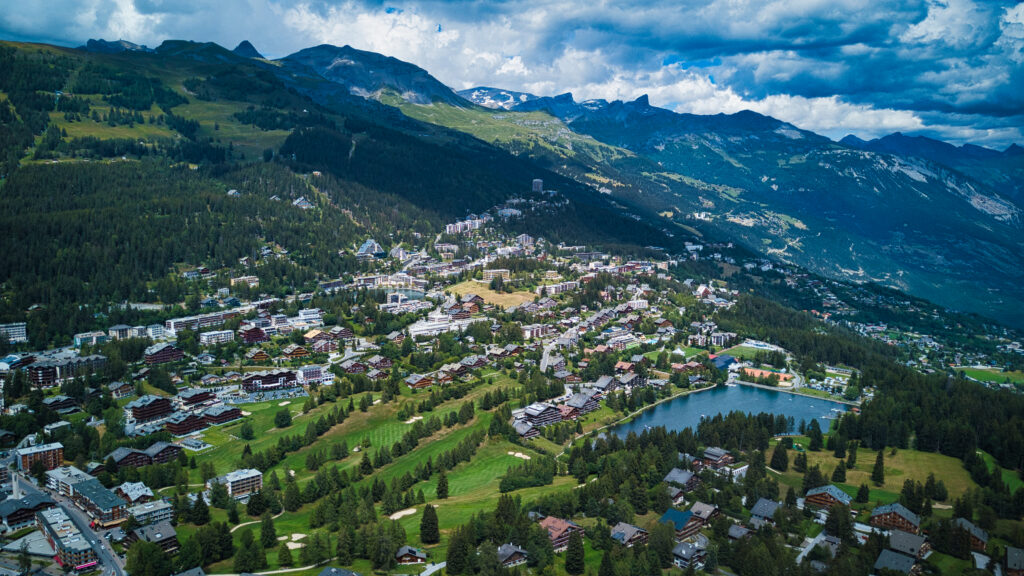
To understand the tragedy, one must understand the setting.Crans-Montana is not just a ski resort; it is a playground for the European elite. Located 200km south of Bern in the canton of Valais, it sits on a sun-drenched plateau overlooking the Rhone Valley. It is a place where billionaires ski in the morning and dine at Michelin-starred restaurants at night.
Le Constellation was the heartbeat of the town’s nightlife. Situated in the town center, it was a structure typical of Alpine architecture: heavy timber, cozy interiors, and panoramic windows. On New Year’s Eve, it was packed to capacity. Reports suggest over 200 people were inside—a mix of locals, seasonal workers, and international tourists from the UK, France, Germany, and Italy.
The Mood at Midnight: Witnesses describe a scene of euphoria. The DJ was playing, sparklers were attached to expensive bottles of vodka, and the countdown to 2026 was deafening. For an hour and a half into the new year, everything was perfect.
Part II: 01:30 AM – The “Flashover”
Then, at exactly 01:30 AM (00:30 GMT), the music stopped.
According to Police Spokesperson Gaetan Lathion, the initial reports were confusing. Was it a bomb? A gas leak? Witnesses reported an “explosion of unknown origin.”
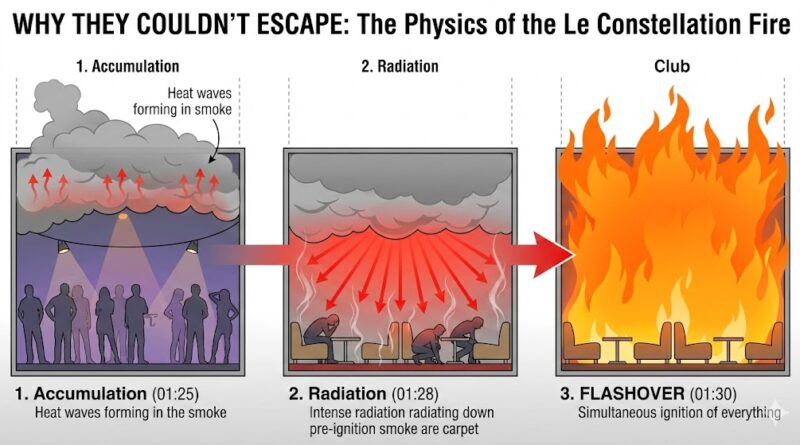
However, as firefighters and forensic experts examined the scene later on Thursday, a more terrifying scientific explanation emerged. Officials are calling it an “Embrasement Généralisé”. In English firefighting terminology, this is known as a Flashover or a Backdraft.
The Science of the Trap
A flashover is not a normal fire spreading from curtain to carpet. It is a thermal instability.
- The Build-Up: A small fire (perhaps from a rogue sparkler or electrical fault) starts in a confined space. It consumes oxygen and releases superheated, combustible gases (smoke) that gather at the ceiling.
- The Heat: The temperature in the room rises rapidly. The smoke itself becomes fuel.
- The Ignition: Once the temperature hits a critical point (approx 600°C), everything in the room that can burn—furniture, clothes, the wooden walls, the smoke itself—ignites simultaneously.
It doesn’t spread; it explodes. This explains why the casualty count is so high. The patrons inside Le Constellation didn’t have minutes to evacuate. They likely had seconds before the air around them turned into fire.
Part III: The Panic in the Snow
Survivors who managed to escape describe a scene from hell. “One moment I was dancing, the next moment the ceiling was orange,” said one survivor, a 24-year-old Italian tourist, to local media Blick. “The heat hit you like a physical punch. People were trampling each other to get to the door.”
The bottleneck at the exit proved fatal. In the panic, the crowd surged forward, creating a crush. Those who made it out rolled in the snow to extinguish their burning clothes. The pristine alpine air was filled with screams and the smell of burning timber and plastics.
The Response: The Swiss emergency services mobilized with military precision, but they were fighting a losing battle against time.
- 10 Helicopters: Air Zermatt and Rega rescue choppers turned the night sky into a landing zone.
- 40 Ambulances: Rushing from across the canton.
- 150 Responders: Firefighters, police, and mountain rescue teams.
Despite their speed, for 40 people trapped inside the heart of the flashover, there was no chance.
Part IV: A Medical Siege Across Borders
The scale of the injuries—115 people, most with severe burns—overwhelmed the local medical infrastructure. A burn injury is the most complex trauma a human body can suffer. It requires immediate, specialized care that small mountain hospitals cannot provide.
The “Medical Bridge”:
- Valais Hospital: The local ICU filled up within the first hour.
- Lausanne & Zurich: University Hospitals in these major cities accepted the overflow. Zurich is currently treating 12 critical patients.
- International Aid: In a rare move, neighboring Italy opened its doors. The major burns unit at Milan’s Niguarda Hospital—one of the best in Europe—was made available. Helicopters ferried victims across the border in the dark.
The Identity Crisis: Perhaps the grimest detail comes from the Italian Ambassador to Switzerland. He noted that identification of the victims could take “weeks.” Why? Because the intensity of the “embrasement généralisé” means that many victims were burned beyond recognition. Authorities are now relying on dental records and DNA samples from distraught family members who have flown in from around the world.
Part V: The Investigation – Arson or Accident?
In the immediate aftermath of a tragedy like this, in a high-profile location, rumors fly. Was this a terror attack? A disgruntled employee?
Beatrice Pilloud, the Prosecutor-General of the Valais canton, moved quickly to quell the conspiracy theories. In a press conference on Thursday, she stated: “Currently we are favoring a fire [accident] and at no time is there question of any attack.”
However, the “unknown origin” remains the key puzzle piece. Forensic teams from Zurich—the best in the country—are currently sifting through the ashes. They are looking for:
- Electrical Faults: Old wiring in the wooden structure overloaded by sound systems?
- Pyrotechnics: Did someone light an indoor flare (a common cause of nightclub fires historically)?
- Negligence: Were fire exits blocked? Was the venue over capacity?
Police have imposed a strict No-Fly Zone over Crans-Montana to allow investigators to use drones for 3D mapping of the debris field without interference from media helicopters.
Part VI: A History of Fire and Ice
Switzerland is known for safety. It is a country of rules, regulations, and precision. Disasters like this strike at the very psyche of the nation.
The President Speaks: Guy Parmelin, President of the Swiss Confederation, captured the national mood in his statement:“What was meant to be a moment of joy turned, on the first day of the year in Crans-Montana, into mourning that touches the entire country and far beyond.”
This tragedy is likely the deadliest fire in modern Swiss history.
- Comparison: In June 2024, an explosion in a parking garage killed two people. That was considered big news. This event, with 40 dead, is on a completely different scale.
- Historical Echoes: You have to go back to 1947 to find an explosion of this magnitude, when the Mitholz Ammunition Depot blew up, killing nine people (though the tonnage was massive). Or the 1970 Swissair bombing (39 dead), which was a terror attack, not an accident.
For a fire to kill this many people in 2026, in a country with some of the strictest building codes in the world, suggests a catastrophic failure of safety protocols that will likely lead to criminal negligence charges in the coming months.
Part VII: The Aftermath – A Town in Silence
Today, Crans-Montana is a ghost town. The ski lifts are running, but few are riding them. The bars are closed. The music is off. A reception center has been set up to support the families of the victims. A helpline (+41 848 112 117) is ringing non-stop with calls from parents in London, Berlin, and Rome, asking the same desperate question: “Is my child on the list?”
The Global Impact: Because this happened in an international resort, the victims are not just Swiss.
- Police confirmed victims from “other countries,” making this a diplomatic crisis as well as a humanitarian one.
- Consulates are scrambling to send representatives to the hospitals in Lausanne and Milan.
Conclusion: The Hard Questions Ahead
As the investigation enters its second day, the shock is turning into anger. How did a popular bar become an incinerator? If this was a “Flashover,” why were flammable materials allowed in such density? Why were 200 people packed into a wooden box with seemingly insufficient escape routes?
New Year’s Day 2026 will forever be marked in the Swiss calendar not as a day of renewal, but as a day of ash. For the families of the 40 victims, the year ended before it even truly began.
Daily Dejavu will continue to follow the forensic investigation as it unfolds.