
Why Dial-Up Internet Was the Best (and Worst) Thing to Happen to the 90s
EEEE-RRRRR-KSSSHHHH-BONG-BONG-HSSSSSHHH. If you can hear that text in your head, your back probably hurts right now, and you should probably schedule a colonoscopy.
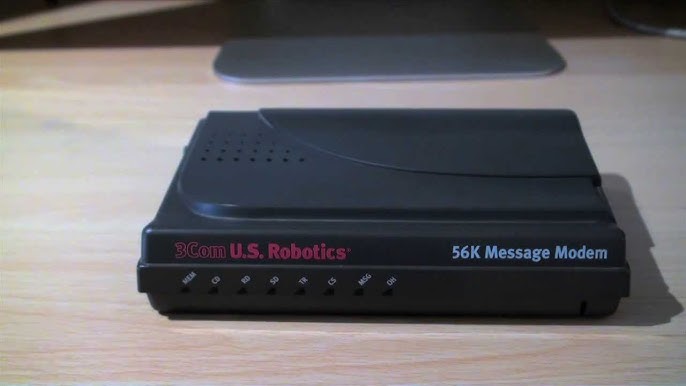
Before fiber optics and 5G gave us instant gratification, accessing the internet was a noisy, deliberate, and violent act. You didn’t just “go online.” You had to connect. And the soundtrack to that connection was the screeching mechanical symphony of a 56k dial-up modem handshake. It was the sound of a computer screaming digital data over a copper telephone line designed for human voices. And to us, it sounded like the future.
The “Mom, Get Off The Phone!” Era The internet in 1998 wasn’t a utility like electricity or water; it was a hostage situation for your house’s landline. You couldn’t be online and make a phone call at the same time. The bandwidth simply didn’t exist. This led to the great civil war of the 90s household.
You had to negotiate with your family for online time. “I need the computer for homework!” (Translation: I want to chat on AIM). There was no greater rage than being 95% done downloading a game demo, only for your mom to pick up the kitchen phone to call Aunt Linda. The connection died instantly. The download failed. The modem hissed in defeat. Rich kids had a second dedicated phone line. The rest of us just had screaming matches.
The Art of the “Handshake” (Why Did It Scream?) Why did it make that horrible noise? That sound was actually two computers talking.
- The Dial Tone: The modem checking if the line is free.
- The Screech: The modem shouting binary code converted into audio frequencies to the ISP’s modem.
- The Hiss: The modems negotiating speed and suppressing background noise. Once the hiss went silent, you were in. You were surfing the Information Superhighway at a blazing speed of 5.6 kilobytes per second.
Napster and the 4-Hour Song Today, if a webpage takes three seconds to load, we panic. We refresh. We complain to our ISP. Back then, waiting was a lifestyle. Downloading a single 3MB song on Napster or Limewire took anywhere from 30 minutes to 4 hours.
You would queue up “Linkin_Park_In_The_End.mp3”, go to school, come back, and pray it was finished. Sometimes, you waited 4 hours only to find out it was a fake file, a virus, or a looped recording of Bill Clinton. This taught an entire generation the virtue of extreme patience. The reward was sweeter because you had to suffer for it.
The “Striptease” of Loading Images Browsing the web was a visual striptease. Images didn’t pop up instantly. They loaded line-by-line, from top to bottom. If you were trying to look at a photo of your celebrity crush, you would stare at the screen as the forehead appeared… then the eyes… then the nose… pausing for 10 seconds… then the mouth. It was slow, clunky, and mesmerizing.
AOL CDs: The Coasters of America You couldn’t escape the marketing. AOL (America Online) wanted you online. They mailed CD-ROMs to every mailbox in America. “1000 Hours Free!” They were in cereal boxes. They were in magazines. They were everywhere. People had so many AOL discs that they used them as drink coasters, Frisbees, or microwave experiments (they sparkled nicely). AOL was the “Walled Garden” of the internet—a safe, curated playpen before we ventured out into the wild west of the open web.
When “Being Online” Was an Event The biggest difference between then and now is intentionality. In 2025, we are never offline. Our phones (see our [Zombie Feed] article) are constantly pinging servers. We are tethered to the matrix 24/7.
In 1998, being online was an Event. You sat down. You turned on the machine. You dialed in. You spent 1 hour in the digital world, and then you logged off. You disconnected. The internet was a place you visited, like a library or a mall. It wasn’t a place you lived.
Conclusion Dial-up was slow, unreliable, and frustrating. But there was a magic to that static hiss. It was the sound of a door opening to a world bigger than your bedroom. We salute you, 56k modem. You taught us patience, you ruined our phone lines, and you gave us the world, one screech at a time.
Read Also : Your Doctor is Now an Algorithm: How “Digital Twins” Are Predicting Heart Attacks Before They Happen