
The Charger War: Why Africa Must Choose Between the “European Rules” or the “Indian Hustle” for EV Growth
Introduction: The “Tower of Babel” Problem in African Mobility
Imagine buying a smartphone, but it only charges with one specific cable from one specific store in one specific city. If you move to another town, your phone becomes a useless brick.
Sounds ridiculous, right? Yet, this is exactly the current state of Electric Mobility (E-mobility) in Africa.
From Nairobi to Lagos, the electric revolution is happening, but it is a messy one. We have disjointed policies, a zoo of different vehicle types, and a confusing web of incompatible chargers. Startups are building “walled gardens”—proprietary batteries that only fit their own bikes, and apps that don’t talk to each other.
To scale up, Africa needs Interoperability. In plain English: We need everything to talk to everything else. Without it, the dream of mass adoption is dead on arrival.
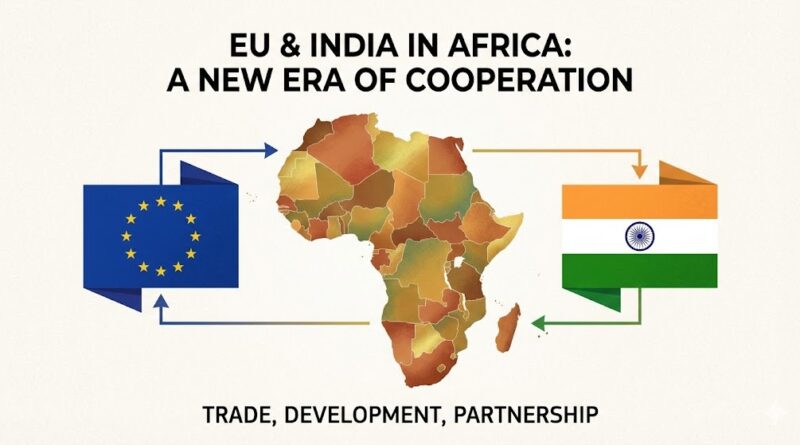
But how do we get there? The world offers two very different blueprints: The strict, regulator-led path of the European Union, and the scrappy, market-driven path of India. Which one should Africa choose?
What on Earth is “Interoperability”? (And Why Should You Care?)
Before we dive into policy, let’s kill the jargon. Interoperability is the magic glue that turns isolated gadgets into a network. Think of USB-C. Before USB-C, we had a drawer full of useless cables. Now, one cable charges your laptop, phone, and headphones. That is interoperability.
In the EV world, this happens on three layers:
- The Hardware: Does the plug actually fit into the socket? (Universal connectors).
- The Software: Can the charging station “talk” to the car to bill you correctly?
- The Money: Can you use one app to pay for charging at any station, just like you use one SIM card to call anyone? (Roaming).
Without this, EV drivers in Africa face “Vendor Lock-in.” You buy a bike from Company A, and you are their prisoner forever because you can’t swap batteries at Company B’s station next door.
Path #1: The European Fortress (Rules, Rules, Rules)
The European Union doesn’t mess around. Their approach to interoperability is simple: “Comply or Die.”
Through strict laws like the Alternative Fuels Infrastructure Regulation, the EU mandated that all public chargers must be digitally connected and open. They forced companies to play nice.
- The Result: EV Roaming. Just like you can use your phone in Paris and Berlin without changing SIMs, European EV drivers can charge anywhere using a single account.
- The Lesson: Regulation creates trust. By setting high standards early, Europe removed the risk for investors.
Path #2: The Indian Bazaar (Innovation First, Rules Later)
India took a different route. Instead of waiting for perfect laws, they let the market run wild—specifically in the Battery Swapping sector for 2-wheelers and 3-wheelers (rickshaws).
Giants like Sun Mobility and Battery Smart created a massive “Battery-as-a-Service” ecosystem. They didn’t wait for a complex unified protocol. They built practical, “good enough” middleware solutions that allowed different operators to connect cheaply.
- The Result: A booming swap market where the vehicle is sold separately from the battery (lowering upfront costs).
- The Lesson: Pragmatism wins. India showed that if you focus on a specific use case (like rickshaws), you can scale fast without drowning in red tape.
Chapter 4: The “Boda-Boda” Economy – Why Africa is Different
To understand why the European model doesn’t fully fit, we must look at who is actually buying EVs in Africa. It is not the wealthy family buying a Tesla Model 3; it is the “Boda-Boda” (motorcycle taxi) rider.
In cities like Kampala, Nairobi, and Cotonou, the motorcycle taxi is the lifeblood of the economy. These riders cover 100-150 km per day. They cannot afford to wait 4 hours for a battery to charge. They need to swap and go in 2 minutes.
The Standardization Nightmare: Currently, a rider financing a bike from Spiro is locked into the Spiro ecosystem. If Spiro goes bankrupt or raises battery prices, the rider loses their livelihood. This risk keeps interest rates high and adoption low. Interoperability is not just a technical feature here; it is a Financial Safety Net. If batteries were standardized (like a AA battery for EVs), a rider could switch providers instantly, forcing companies to compete on price and service, not on locking users in.
Chapter 5: The Elephant in the Room – The Power Grid
We cannot talk about electric mobility without talking about electricity. Unlike Europe, where the grid is stable, many African nations face frequent load-shedding and blackouts.
- The Interoperability Solution: If charging stations are interoperable, they can be aggregated into a “Virtual Power Plant.”
- Solar-Powered Swapping: We are seeing the rise of off-grid, solar-powered swap stations. If these stations share a common connector standard, a localized solar microgrid in a rural village could service bikes from five different brands. This unlocks rural mobility in a way that proprietary systems never could.
Chapter 6: The Battery Chemistry War (Safety vs. Cost)
Another layer of fragmentation is the battery tech itself.
- NMC (Nickel Manganese Cobalt): High energy density but sensitive to heat.
- LFP (Lithium Iron Phosphate): Cheaper, safer, and handles the African heat better, but heavier.
Without a unified standard, Africa is becoming a dumping ground for various battery chemistries from China. This poses a safety risk. A proprietary charger designed for an LFP battery might cause a fire if forced to charge an NMC battery. Interoperability requires strict safety protocols. It forces manufacturers to agree on a “Safe Baseline” for thermal management, which is crucial in sub-Saharan temperatures.
Chapter 7: The Financial Case – Lowering the Total Cost of Ownership (TCO)
Let’s talk money. The biggest barrier to EV adoption in Africa is the upfront cost. An electric motorcycle costs roughly $1,500, while a petrol bike costs $800. To bridge this gap, companies use Asset Financing (pay-as-you-go).
How Interoperability Lowers Costs:
- Resale Value: A proprietary bike has zero resale value if the parent company dies. An interoperable bike retains value because it can run on any network. Higher resale value = Lower risk for banks = Lower interest rates for riders.
- Infrastructure Sharing: If three companies share one swapping station, they split the CAPEX (Capital Expenditure). They don’t need to build three separate stations side-by-side. These savings can be passed down to the rider.
The African Reality: A Fragmented Frontier
So, where does Africa stand? Currently, we are in the “Wild West” phase. In hotspots like Kenya, Rwanda, and Uganda, players like Ampersand, Roam, and Spiro are doing amazing work, but they are building silos. A Spiro driver cannot swap batteries at an Ampersand station.
Why? Because everyone wants to own the market. Proprietary tech is a moat. But in the long run, this moat becomes a prison. With no local manufacturing base, Africa is importing a chaotic mix of incompatible hardware, making standardisation a nightmare.
The Verdict: Africa Needs a Hybrid Strategy
Africa cannot simply copy-paste Europe or India. We need a “Third Way.”
- Don’t wait for perfection. We cannot afford the heavy bureaucratic delays of the EU model. We need the speed of India.
- But don’t let chaos rule. We need regulators to step in NOW—not to stifle innovation, but to mandate basic “digital connectivity.” Every new charger installed today must be smart-ready.
The Leapfrog Opportunity: Africa has an ace up its sleeve: Mobile Money. We already have the world’s best interoperable payment system. If we can integrate EV charging with M-Pesa or MTN Mobile Money across borders, we solve the “Commercial Layer” instantly.
The Call to Action:
- For Regulators: Stop sleeping. Mandate open APIs now before the concrete dries.
- For Startups: Stop fighting each other. Open your networks. Ampersand has already started opening its battery network to other manufacturers. This is the future.
Conclusion: Interoperability is inevitable. The question is not if, but when. Africa can choose to coordinate now and build a super-highway, or wait 10 years and spend billions fixing a broken dirt road.
🧱 Key Takeaways
- Europe uses strict laws to force standardized roaming.
- India uses market-driven “Battery-as-a-Service” to scale fast.
- Africa is currently fragmented but has the potential to leapfrog both by leveraging Mobile Money and smart regulation.
🛡️ DISCLAIMER
This article is an analysis of market trends and does not constitute investment advice. The views expressed are those of the Daily Dejavu editorial team.