
Vanished in The Mist: The Unsolved Mystery of Syafiq Ali and The Dark Legend of Mount Slamet
PEMALANG, Central Java — There is a silence that falls over a mountain when the rescue helicopters power down and the volunteer squads pack up their tents. It is a heavy, suffocating silence. It is the sound of hope transforming into resignation.
On Wednesday evening, January 7, that silence descended upon the slopes of Mount Slamet, the second-highest volcano on the island of Java.
After more than ten days of a grueling, high-stakes operation involving hundreds of personnel, drones, and sniffer dogs, the search for Syafiq Ali, an 18-year-old high school student from Magelang, has been officially terminated. The mountain, often revered and feared in equal measure by locals, has refused to give him back.
The story of Syafiq Ali is not just a news snippet; it is a tragedy that highlights the fragile line between adventure and catastrophe in the unforgiving wilderness of Indonesia.
Part I: The Ambition of Youth and the “Tektok” Phenomenon
To understand how this tragedy unfolded, one must first understand the mindset of the modern hiker. In recent years, a trend known as “Tektok” has swept through the Indonesian hiking community. It involves climbing up and down a mountain in a single day—without camping, without heavy gear, relying solely on speed and stamina.
It is an adrenaline rush, but on a beast like Mount Slamet (3,428 meters above sea level), it is a gamble with death.
The Departure On the night of Saturday, December 27, 2025, two young friends, Syafiq Ali and his companion Himawan, stood at the base of the Dipajaya route in Pemalang. They were young, fit, and full of confidence. Their plan was simple: ascend through the night, catch the sunrise at the summit, and be back down by Sunday afternoon.
The Dipajaya route is known for its relentless incline. It cuts through dense tropical rainforests before opening up to the barren, sandy volcanic scree near the top. For a “Tektok” attempt, timing is everything.
According to registration data at the Basecamp, the duo checked in with high spirits. They carried light packs, expecting to be out of the woods within 18 hours. But as Sunday evening approached and the sun dipped below the horizon, they did not return to the checkpoint.
Part II: The Split-Second Decision at Pos 9
The disaster did not happen at the bottom, but near the very top, in the thin air where judgment becomes clouded by hypoxia and exhaustion.
Based on the testimony of the survivor, Himawan, the two friends reached the upper limits of the mountain but ran into trouble during the descent. The terrain of Mount Slamet is notoriously punishing—loose rocks, steep ravines, and confusing vegetation.
The Injury Somewhere near Pos 9 (Post 9)—one of the highest points on the trail before the summit push—Himawan suffered an injury. His legs gave out. He could no longer keep pace. It was here that the fatal decision was made.
In hiking, the golden rule is “Never Separate.” But in desperate situations, panic overrides protocol. Syafiq Ali, seeing his friend in distress and likely realizing they were running out of water and daylight, made a brave but perilous choice. He decided to go ahead. He would descend faster, reach the basecamp, and bring back a rescue team for Himawan.
Ali walked away into the mist, intending to be a hero. He was never seen again.
Part III: The Miracle and the Mystery
Monday morning brought a glimmer of hope. Local volunteers, alerted by the basecamp that the boys were overdue, launched an initial sweep. In a stroke of luck, they found Himawan.
He was discovered outside the official trekking path, disoriented and in pain, but alive. He was immediately evacuated to the Dipajaya Basecamp, where he received medical attention. But his first words sent a chill down the spines of the rescuers: “Ali went down before me to get help.”
If Ali had gone ahead, he should have arrived hours ago. The realization hit the SAR (Search and Rescue) team like a physical blow: Ali wasn’t at the base. He wasn’t on the trail. He had vanished into the labyrinth of ridges and ravines that flank the mountain.
Part IV: The Massive Operation
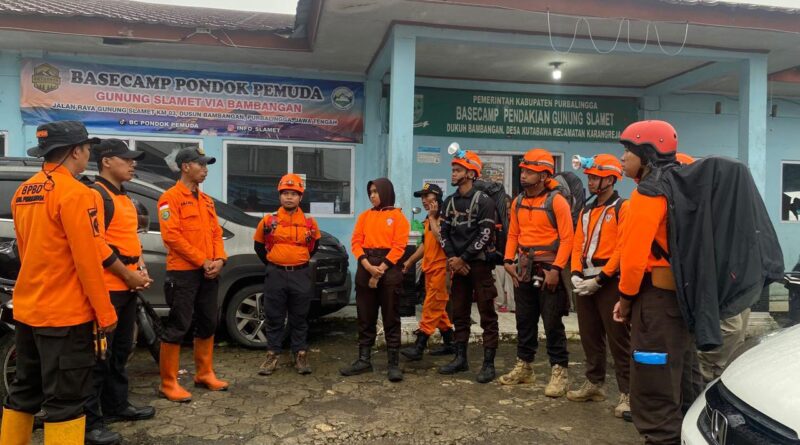
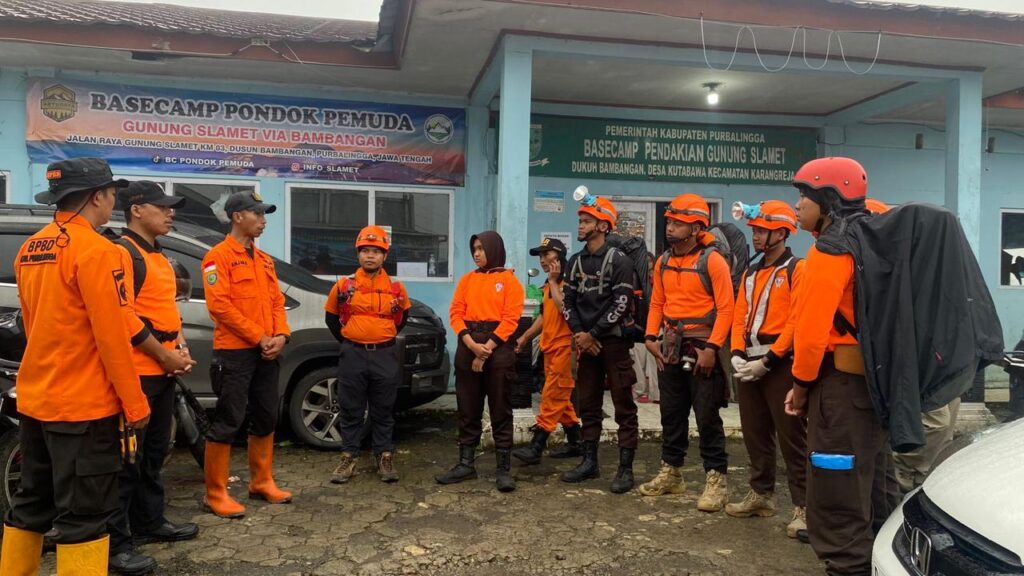
For the next ten days, Mount Slamet became the stage for one of the largest search operations in recent Central Java history.
Agus Ikmaludin, the Head of the Regional Disaster Management Agency (BPBD) in Pemalang, described the intensity of the effort. “We deployed everyone. Basarnas, local volunteers, nature lover groups (Mapala), and even villagers who know the terrain better than anyone,” he said.
The Challenges Searching Mount Slamet is not like searching a park.
- The Weather: January is the peak of the rainy season. Visibility was often reduced to less than five meters by thick fog and torrential downpours.
- The Terrain: The search area expanded beyond the hiking trail into the “Blank Zones”—deep ravines and riverbeds where a person could easily fall and be hidden by the dense canopy.
- The Cold: At night, temperatures on the slope drop drastically. For a “Tektok” hiker carrying minimal equipment (likely no sleeping bag or tent), hypothermia is a ticking clock.
Handika, from the Basarnas Pemalang Unit, recounted the exhaustion of the teams. “Hundreds of volunteers from various regions joined in. We combed the river flows, we rappelled down cliffs, we flew thermal drones over the canopy. We did everything humanly possible.”
They found footprints. They found broken branches. But they never found Syafiq Ali.
Part V: The Hardest Goodbye
Standard Operating Procedure (SOP) for Search and Rescue in Indonesia typically lasts for seven days. Because of the difficult terrain and the age of the survivor, the team extended the search by an additional two days. Total: 9 to 10 days of searching.
But nature has limits, and so does human endurance. On Wednesday, January 7, at 17:00 WIB, the difficult meeting took place at the command post. The SAR chiefs sat down with Syafiq Ali’s family.
They laid out the maps. They showed the tracks they had covered. They explained that the chances of survival without gear after ten days in extreme weather were mathematically zero.
A Family’s Grace In a moment of profound strength, Ali’s family accepted the reality. “The family accepted the closure of the operation,” Handika told the press. “Their reception of the Basarnas team and the volunteers was incredibly kind, despite their grief.”
They did not scream. They did not blame. They thanked the dirty, exhausted volunteers who had spent days risking their own lives to find their son. It was a heartbreaking display of resignation and gratitude.
Part VI: “Pemantauan” – The Silent Watch
As of Thursday morning, January 8, 2026, the status of the mission has shifted from “Search and Rescue” to “Pemantauan” (Monitoring).
What does this mean? It means the helicopters are gone. The command tent is dismantled. But the eyes of the mountain people remain open. “If a independent hiker or a local villager finds a sign—a shoe, a piece of clothing, or the body—we will mobilize immediately,” Agus Ikmaludin explained.
The search is technically over, but for the rangers of Mount Slamet, the watch never truly ends. Syafiq Ali is now part of the mountain’s history, one of the “eternal hikers” who remain on the slopes.
Part VII: Lessons Written in Tears
The tragedy of Syafiq Ali serves as a grim wake-up call for the outdoor community in Indonesia. The allure of the “Tektok” hike is undeniable—it’s fast, cheap, and looks great on social media. But it leaves zero margin for error.
The Fatal Errors:
- Separation: The moment Ali left Himawan, the “buddy system” broke. In survival scenarios, two brains are better than one. Alone, panic sets in faster.
- Navigation: When rushing to get help, hikers often try to take shortcuts (“potong kompas”). On a volcano like Slamet, shortcuts often lead to sheer cliffs or dead-end ravines.
- Gear: Speed hiking often means carrying just a bottle of water and a raincoat. Without a thermal blanket or emergency bivouac, a single twisted ankle can become a death sentence due to exposure.
Conclusion: The Empty Room in Magelang
Tonight, in a house in Magelang, there is an empty room. A school uniform hangs in the closet. A mother and father are trying to navigate a world where their son went for a walk and never came back.
Mount Slamet stands tall against the Central Java skyline, shrouded in clouds. It is majestic, beautiful, and indifferent to human suffering. For the hiking community, Syafiq Ali’s name will be whispered around campfires as a warning and a prayer. Al-Fatihah for Ali. May the mountain hold him gently until he is found.