
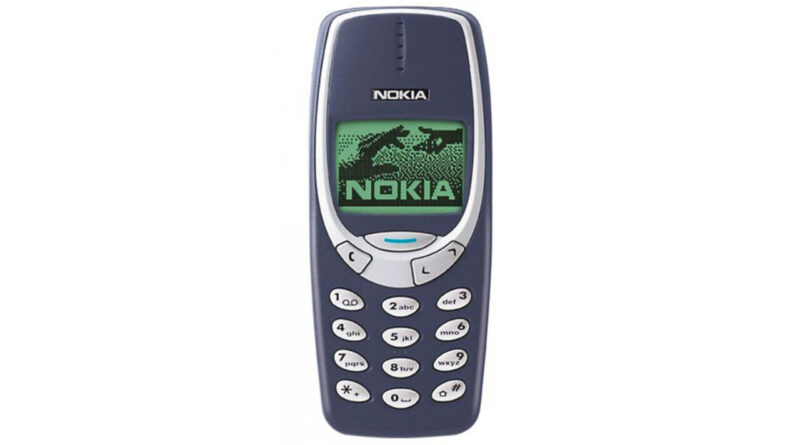
Why the Nokia 3310 Is Still the King of Mobile Phones (25 Years Later)
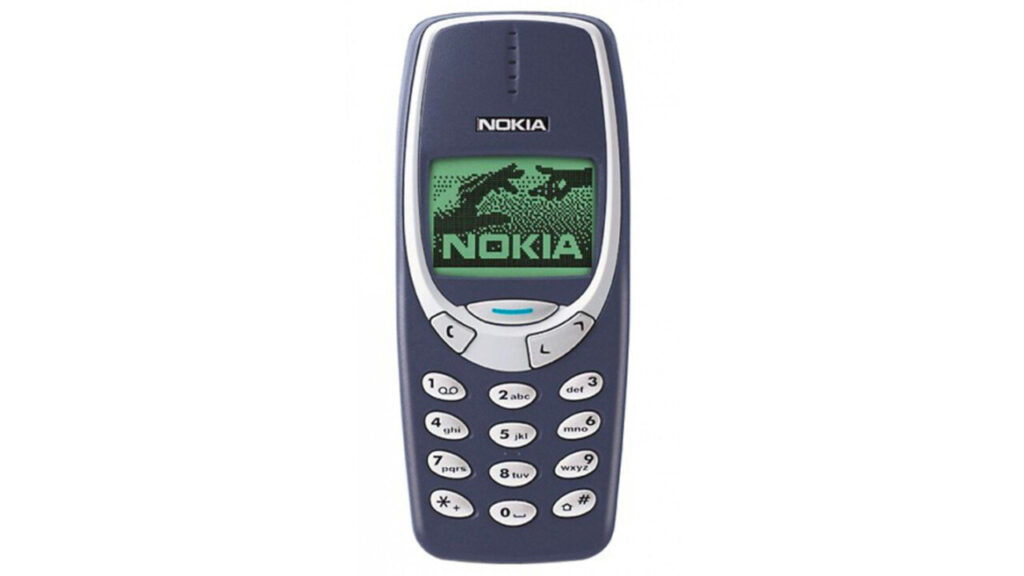
Drop an iPhone 15 Pro Max on a carpet, and the screen shatters into a thousand tears along with your bank account. Drop a Nokia 3310 on a concrete sidewalk, and you have to apologize to the sidewalk.
Released in September 2000, the Nokia 3310 wasn’t just a phone. It was a cultural phenomenon. It was a tank disguised as a communication device. With over 126 million units sold, it is arguably the most loved gadget in human history. In a world of fragile glass rectangles that cost $1,200 and break if you look at them wrong, the 3310 stands as a reminder of a time when technology was built to survive the apocalypse.
The Engineering of a Tank The internet jokes about the 3310 being indestructible—claiming it can stop bullets or break floors—but the engineering behind it is genuinely brilliant. Unlike modern phones which glue glass to metal, the 3310 was made of a flexible, shock-absorbing plastic composite.
If you dropped it, the phone would often explode into three parts: the back cover, the battery, and the phone itself. This was a feature, not a bug. By flying apart, the phone dissipated the kinetic energy of the impact. You simply picked up the pieces, snapped them back together, and continued your call. It was the ultimate definition of the [Right to Repair]—a concept we are desperately trying to bring back in 2025.
The Battery That Lasted Forever Modern smartphone users live in a state of constant low-level anxiety. We carry power banks, we hoard charging cables, and we hunt for wall outlets at airports like desperate scavengers. Nokia 3310 users didn’t have this fear.
Powered by a modest 900 mAh NiMH battery, this beast didn’t measure battery life in hours; it measured it in days. You charged it on Sunday night. By Thursday morning, it was still at 3 bars. Why? Because it didn’t have apps tracking your location, it didn’t have a 4K screen draining power, and it didn’t listen to your conversations to serve you ads. It just had pure, unadulterated cellular efficiency.
Snake II: The Peak of Mobile Gaming Forget Call of Duty Mobile. Forget Candy Crush. The greatest mobile game ever made was Snake II. There were no microtransactions. There was no “Pay $0.99 to Revive.” There were no 30-second video ads. Just a pixelated line getting longer and longer, moving faster and faster, until you panicked and ate your own tail.
It was simple, addictive, and played by millions of people on the toilet, under school desks, and on buses. It proved that you don’t need Ray-Tracing graphics to have fun; you just need good gameplay mechanics.
T9 and the Art of Blind Texting The 3310 also revolutionized how we communicated through SMS. Before the QWERTY touchscreen, there was the 12-key numpad and the magic of T9 (Text on 9 keys). For the uninitiated, T9 was a predictive text algorithm that felt telepathic.
Teenagers in the early 2000s developed a superpower: Blind Texting. We could type out entire paragraphs of drama to our crush while keeping the phone hidden in our pocket during Math class, purely by muscle memory. Try doing that with an iPhone touchscreen today.
The “Composer”: The Original Spotify Before MP3s, we had the Composer. The 3310 allowed you to program your own ringtones by typing in notes (e.g., 4d1 4e1 4f1). This turned every kid into a amateur music producer. Magazines would print the “codes” for popular songs like Eminem or Britney Spears. We spent hours painstakingly typing in the codes just so our phone would beep out a monophonic version of The Real Slim Shady. It was customization in its rawest form.
Why It’s Making a Comeback Here is the twist: The Nokia 3310 isn’t just a museum piece. In 2025, used prices for original 3310s are rising. Why? Because of the [Analog Rebellion]. People are tired of being tracked. They are tired of the “Notification Hell” of modern smartphones.
Drug dealers used to use “burner phones” to avoid the police. Now, software engineers and CEOs are buying 3310s to avoid the algorithm. It is the ultimate “Digital Detox” device. It forces you to be present in the real world.