The Cola Wars and the Red Fleet: The Bizarre True Story of How Pepsi Became the World’s 6th Largest Navy
Coca-Cola might be the most recognized brand in the world. It is the symbol of American capitalism. But did Coke ever own a fleet of Soviet attack submarines? Did Coke ever strike a deal that arguably disarmed a nuclear superpower? I don’t think so.
In the annals of corporate history, there are strange deals, and then there is the Pepsi-Soviet Deal of 1989. For a brief, shining moment in history, the maker of your favorite sugary soda wasn’t just a beverage company. It was a military power. Here is the true story of how a currency crisis turned a soda CEO into an Admiral.
The Kitchen Debate: How Pepsi Infiltrated the USSR To understand the warships, we have to go back to 1959. The Cold War was icy hot. U.S. President Eisenhower sent Vice President Richard Nixon to Moscow to host an exhibition of American culture. The goal was to show the Soviets the benefits of capitalism. At the exhibition, Donald Kendall (then a Pepsi executive) pulled off a marketing miracle. He convinced Soviet Premier Nikita Khrushchev to drink a cup of Pepsi for a photo op.
Khrushchev drank it. He frowned. Then he drank more. The photo of the Soviet leader holding a Pepsi cup went viral globally. Years later, in 1972, Pepsi struck an exclusive deal to become the first Western product sold in the USSR. Coke was locked out. The Soviets loved the brown fizz. By the late 80s, they were drinking it by the billion gallons.
The Problem: Your Money is Worthless There was just one massive problem: Money. The Soviet currency, the Ruble, was a “blocked currency.” It was worthless outside the USSR. You couldn’t take a truckload of Rubles to a bank in New York and exchange them for Dollars.
So, how do you pay for billions of dollars worth of Pepsi syrup? Barter. Initially, they used Vodka. For nearly two decades, Pepsi accepted payments in Stolichnaya Vodka. Pepsi became the exclusive importer of Stoli to the US. We give you syrup; you give us booze. But by 1989, the Soviet thirst for Pepsi had outpaced the American thirst for Vodka. The Soviets needed more soda, but they had run out of things to trade. Except for one thing.
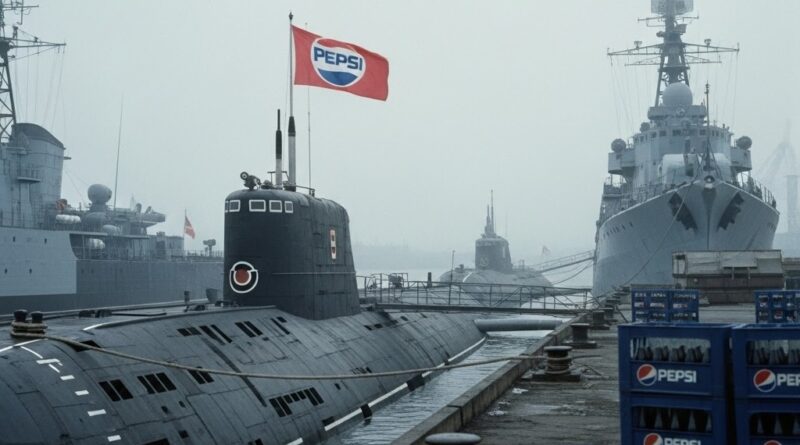
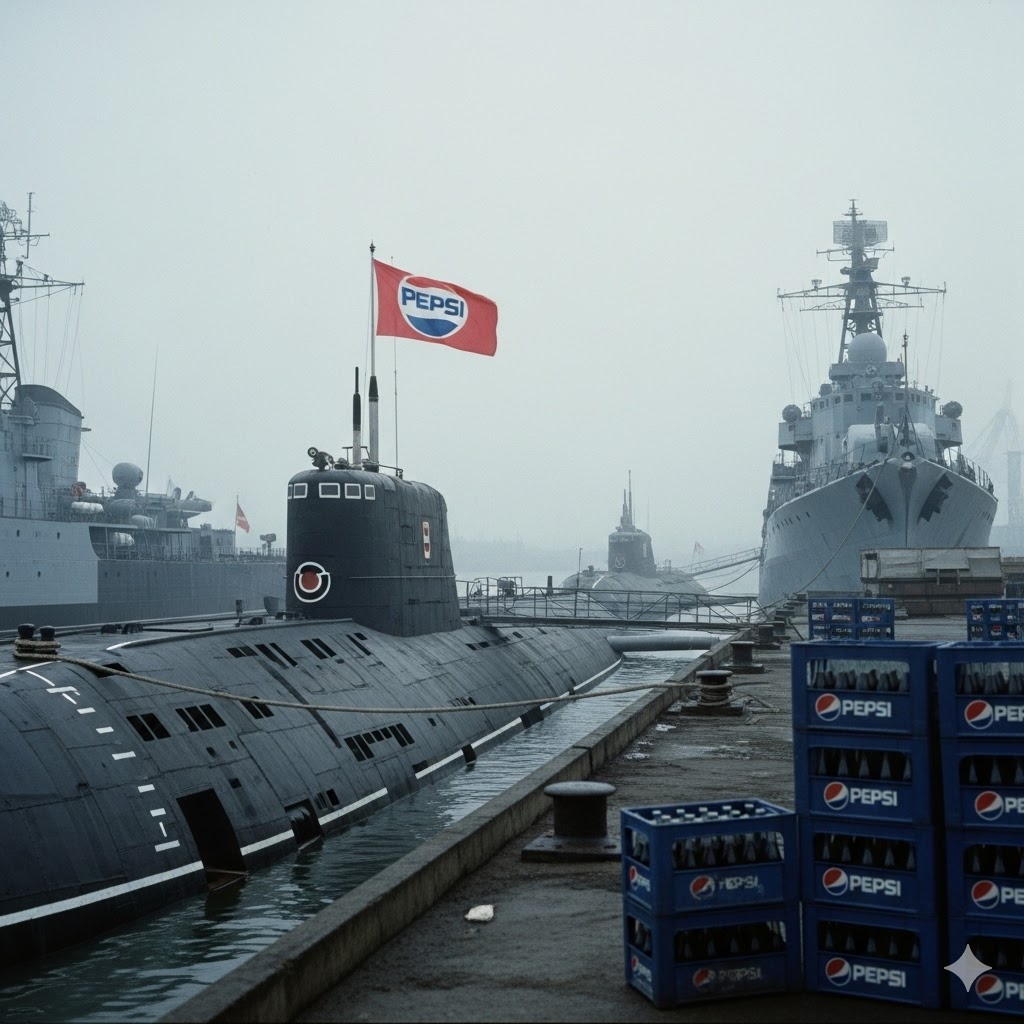
Soda for Submarines The Soviet Union was crumbling economically, but they still had a massive military surplus. So, in 1989, Pepsi and the USSR struck one of the strangest deals in corporate history. In exchange for a massive shipment of Pepsi syrup, the Soviet government handed over a naval flotilla consisting of:
- 17 Attack Submarines (mostly obsolete diesel-electric Whiskey-class subs).
- 1 Cruiser
- 1 Frigate
- 1 Destroyer
It wasn’t a joke. The paperwork was signed. The title deeds were transferred. A soft drink company based in Purchase, New York, legally owned a fleet of warships.
The “6th Largest Navy” Myth For a few days, before the ships were towed to a Swedish shipyard for scrap recycling, military analysts crunched the numbers. In terms of raw vessel count, Pepsi possessed a fleet larger than most countries. It is widely cited that, for that brief window, Pepsi commanded the 6th largest navy on the planet.
While the submarines were rusty and likely couldn’t dive without leaking, the symbolism was powerful. A symbol of Western consumerism had literally bought the military might of the East.
“We Are Disarming You” The deal raised eyebrows in Washington D.C. Donald Kendall, who was now the CEO of Pepsi, faced questions from the Bush administration. Was it legal for a US corporation to own Soviet warships? Kendall famously replied to Brent Scowcroft (the National Security Adviser):
“I’m dismantling the Soviet Union faster than you are.”
And he was right. Pepsi was turning weapons of war into scrap metal to pay for sugary drinks. It was the ultimate capitalist victory.
The End of the Party Pepsi had planned an even bigger deal for 1990—swapping soda for brand new Oil Tankers worth $3 billion. But history had other plans. In 1991, the Soviet Union collapsed. The red map shattered into Russia, Ukraine, Belarus, etc. Pepsi’s deal of the century evaporated. They were left scrambling to figure out which new country owed them money. Coca-Cola swooped in during the chaos and took over the market.
Conclusion Today, the Cola Wars are fought with Super Bowl ads and TikTok influencers. But let us never forget the time when the stakes were higher. When the currency was Vodka, the price was a submarine, and Pepsi was arguably a naval superpower. Next time you crack open a can, pour one out for Admiral Kendall.
Read also: Operation Acoustic Kitty