
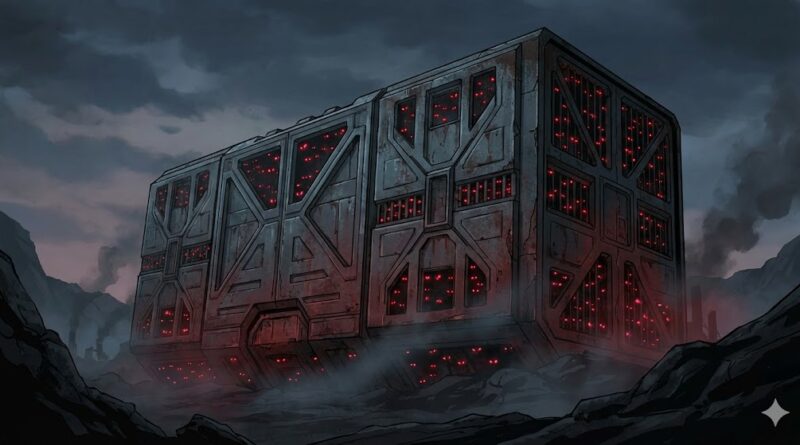
The Beautiful Ones: Did a 1970s Experiment Predict the Collapse of Modern Society?
Imagine a world with no poverty. No hunger. No disease. No predators. A world where every need is met instantly, and you can live in absolute safety. It sounds like Heaven, doesn’t it? In 1968, an ethologist named John B. Calhoun created this exact world. But he didn’t build it for humans. He built it for mice.
He called it “Universe 25.”
On paper, it was a Utopia. But within two years, this paradise didn’t just fail—it descended into a scene of pure horror involving senseless violence, child abandonment, and eventually, total extinction. Why are we talking about an old mouse experiment in 2026? Because when you look at the “symptoms” of universe 25, they look terrifyingly similar to our modern world.
The Setup: Unlimited Resources, Unlimited Doom
Dr. Calhoun built a massive tank. He kept it clean. He provided unlimited food and water dispensers that could feed thousands. He eliminated all predators. The temperature was perfect (20°C). He introduced 4 pairs of healthy mice (Adam and Eve figures).
Phase A: The Dream At first, it was a party. The mice lived in luxury. They reproduced rapidly, doubling their population every 55 days. They were happy, fat, and social. But then, the population hit a critical mass. Not a shortage of food—there was plenty of food—but a shortage of space and role.
The “Behavioral Sink”: When Society Breaks Down
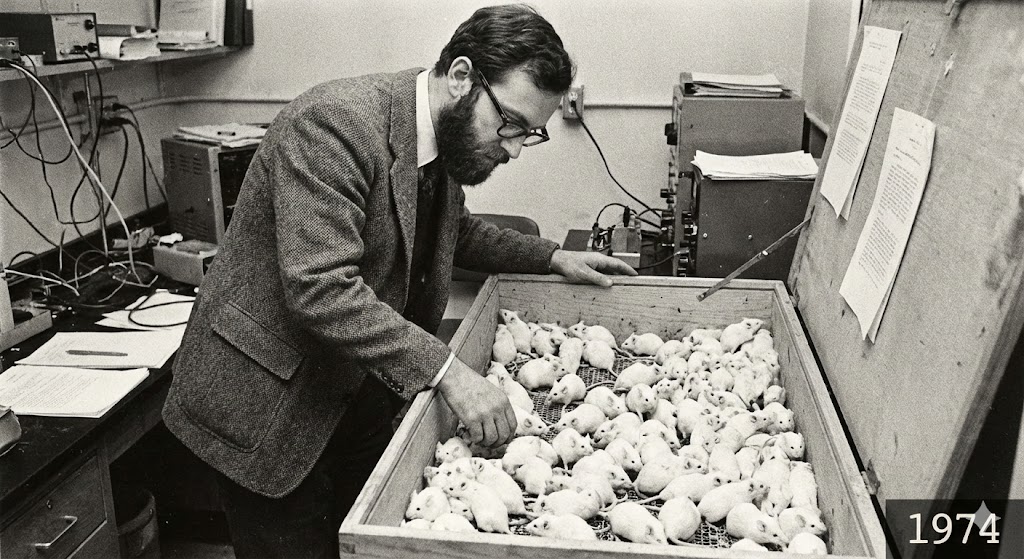
As the enclosure filled up, something strange happened. The mice stopped acting like mice. With no need to hunt or forage, and nowhere to be alone, the social structure collapsed. Calhoun called this the “Behavioral Sink.“
1. The Violence
Male mice, having no territory to defend and no role to play, became hyper-aggressive. They formed gangs that would attack others for no reason. They weren’t fighting for food; they were fighting out of pure boredom and stress.
2. The Failed Mothers
Female mice, stressed by the overcrowding, stopped building nests. They began to abandon their babies. In some horrific cases, they would attack and eat their own offspring, even though food dispensers were full right next to them.
3. The Dropouts (The “Hikikomori”)
Then came the saddest group. A generation of mice that simply… gave up. They withdrew from society. They slept all day. They didn’t fight, they didn’t court females, and they didn’t reproduce. They were “physically healthy” but “socially dead.”
The Rise of “The Beautiful Ones”
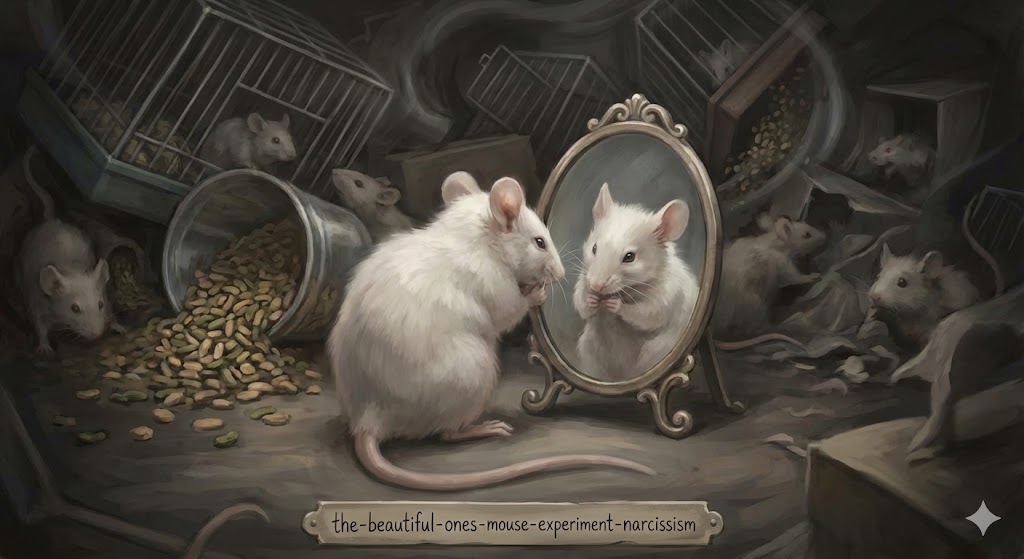
The final phase of the colony was dominated by a group Calhoun called “The Beautiful Ones.” These were mice that were obsessed with themselves. They spent their entire waking lives grooming their fur. They looked perfect—sleek, clean, unscarred by battle. But they were hollow. They had zero social skills. They had no interest in mating. They had no interest in connection. They were narcissistic shells living in a dying world.
Does that sound familiar? In the age of Instagram filters, “lying flat” movements, and plummeting birth rates across the developed world, “The Beautiful Ones” feel like a prophecy. Perhaps this experiment even sheds light on why time flies as we age, as we seek meaning beyond mere existence.
The Extinction Event
On day 600, the colony was doomed. Even though the population had dropped and there was plenty of space again, the mice had forgotten how to be mice. The new generation didn’t know how to mate. They didn’t know how to raise young. The population crashed to zero. Universe 25 ended not with a bang, but with a whimper.
Conclusion: A Warning for Us?
Critics argue that humans are not mice. We have culture, technology, and reason. We can adapt. But the parallels are hard to ignore. We live in a world of relative abundance (calories are cheap, entertainment is infinite), yet mental health crises are skyrocketing. We see social withdrawal (Hikikomori in Japan, NEETs in the West). We see birth rates collapsing in the most advanced cities. This is especially concerning when considering trends like the cashless society and its potential impact on social interaction.
Universe 25 teaches us a brutal lesson: Struggle is necessary. Without challenges to overcome, without a meaningful role to play in a community, a “perfect” life loses its meaning. Maybe Utopia isn’t a dream. Maybe, as the mice found out, it’s a trap. It also makes you wonder about the implications of things like AI generated music and the potential devaluation of human creativity.